Born on September 12, 2026: yin Earth Ox that stores the harvest while Rooster month keeps the ledger sharp
Saju for 2026-09-12 — Gi-Chuk day under Byeong-O year and Jeong-Yu month. Eight boxes; hour fixed to Ja when unknown.
Source: Korelay saju engine
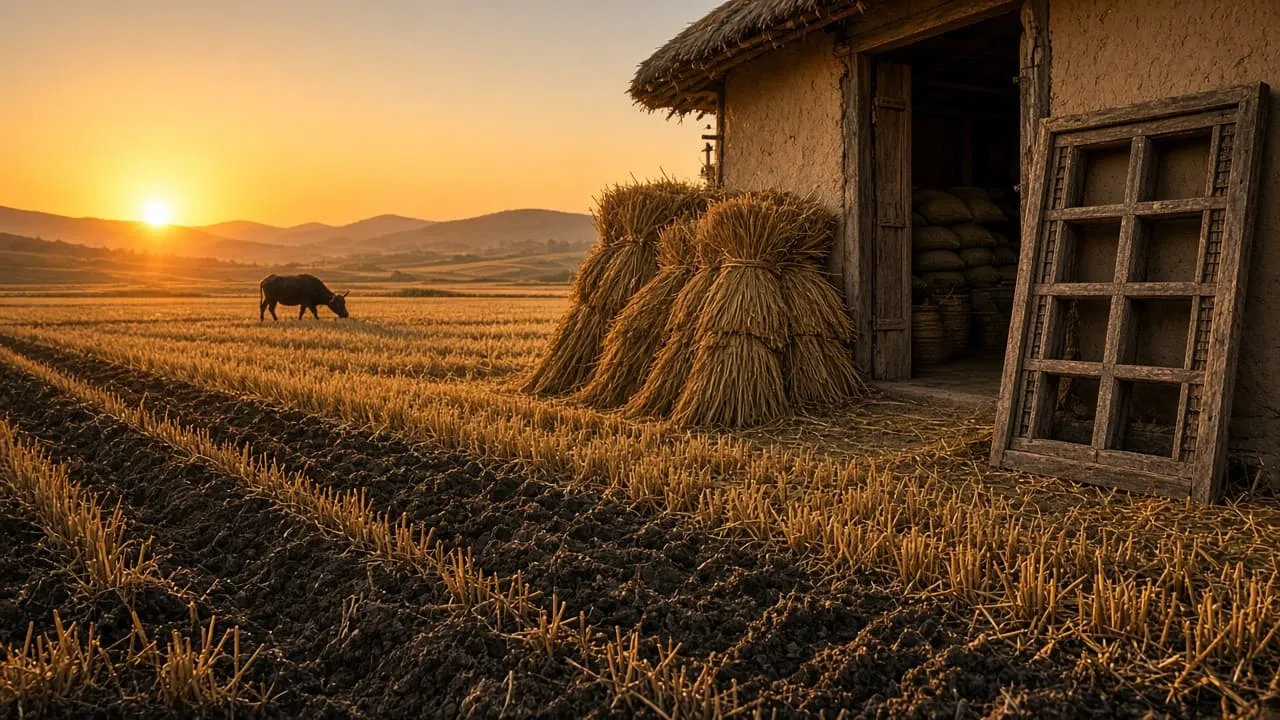
If you were born on September 12, 2026, the traditional Korean sketch is this: a cut stubble field at first light where patient soil holds what the season already gathered while Fire Horse heat and a Rooster month keep every outer schedule bright and sorted — Gi over Ox, yin earth that prefers steady storage to loud display, a self that earns trust by finishing what was planted when the year runs hot and the month keeps trimming every corner.
Saju (사주) here is the eight-character board (사주팔자): Fire Horse year, Fire Rooster month, Earth Ox day, Ja-hour fill.
Year · Month · Day · Hour · hour unknown → fixed to Ja hour (자시, ~11pm–1am)
- Top = upper letters
- Bottom = lower letters
병오 · 정유 · 기축 · 갑자 — read left to right as year, month, day, hour.
What the first six letters are doing
병오 year is Fire Horse climate — bright heat, public pace, a decade that rewards visible motion. 정유 month adds Jeong fire on Rooster: dawn manners, sharp timing, season habits that sort and finish rather than wander. Horse-year blaze meets rooster refinement; the outer weather stays loud, but the month column already wants things trimmed and named.
기축 day is the “you” stamp. Gi (기) is yin Earth — garden soil, patient mulch, intelligence that builds by holding rather than flashing. Ox (축) is stored earth in the branch cycle: late-winter warehouse, plow rhythm, harvest kept under roof. Year and month sell fire and rooster polish; the day stem lands yin earth on ox ground — not a blaze that races the horse plain, but footing that stores what the season already earned.
Fused: Fire Horse weather outside, Rooster-month sorting in season, day self that moves as Earth Ox — yin Earth Ox that stores the harvest while Rooster month keeps the ledger sharp.
When the month keeps naming every deadline, Gi earth answers with furrow patience rather than rooster chatter. Fire Horse weather pushes spectacle; Ox storage asks what actually belongs under roof before the next sprint. The useful read is not “move slower forever” but finish the row you opened — yin earth on ox ground favors builders who know which harvest is worth keeping when the plain outside is already running hot.
The hour column (why it is filled)
Birth hour is unknown on a calendar-day chart, so Korelay fixes Ja hour and writes 갑자 — yang Wood over Rat, per the five-rat stem table on a Gi day. That last pair shifts from yin earth and ox storage to yang wood at midnight: a sprouting edge beside daylight patience, Rat channels underneath both columns. Treat the hour as a light sketch for children and later life — useful for sibling comparisons or late-life tone, never a substitute for a timed chart. If the real hour is known, swap only the last pair; 병오 / 정유 / 기축 still frame the portrait.
At Ja, Gap over Rat adds wood growth to a day already stamped with yin earth — midnight green beside packed soil, a forward note after fire weather on the board. Siblings born the same calendar day but with a known hour may show a different last pair; compare lightly for tone around children or later life, not as a verdict on the daylight portrait.
Caveat
Cultural sketch, not medical, financial, or sealed-fate advice. Ja hour is a disclosed stand-in. Do not read Earth Ox as a command to hoard every harvest before moving; read it as a literacy frame for how Korean calendars stamp a day with yin earth while Fire Horse weather and a Fire Rooster month stay bright.
Source
Korelay board for 2026-09-12: 병오 / 정유 / 기축 / 갑자 (자시 fixed).