Korea society brief: record tropical nights so far this summer
Nationwide average 7.8 tropical nights June–July 27; heat into early August
Source: Korea JoongAng Daily
What happened
Korea’s heat story is now as much about the hours after sunset as the afternoon peak. The Korea Meteorological Administration (KMA) counted a nationwide average of 7.8 tropical nights from June 1 through July 27, the highest for that period since nationwide observations began in 1973, according to Korea JoongAng Daily. A tropical night means the overnight low does not fall below 25C.
Seoul recorded seven consecutive tropical nights from last Wednesday through Tuesday. At the same time, the most extreme daytime heat was concentrated farther southeast: parts of North and South Gyeongsang approached 40C, while Daegu had already logged nine straight days with highs of at least 33C. The KMA expects daytime highs of 33C to 39C from Aug. 1 to 7; Daegu is forecast to reach 39C each day of that stretch.
The breakdown
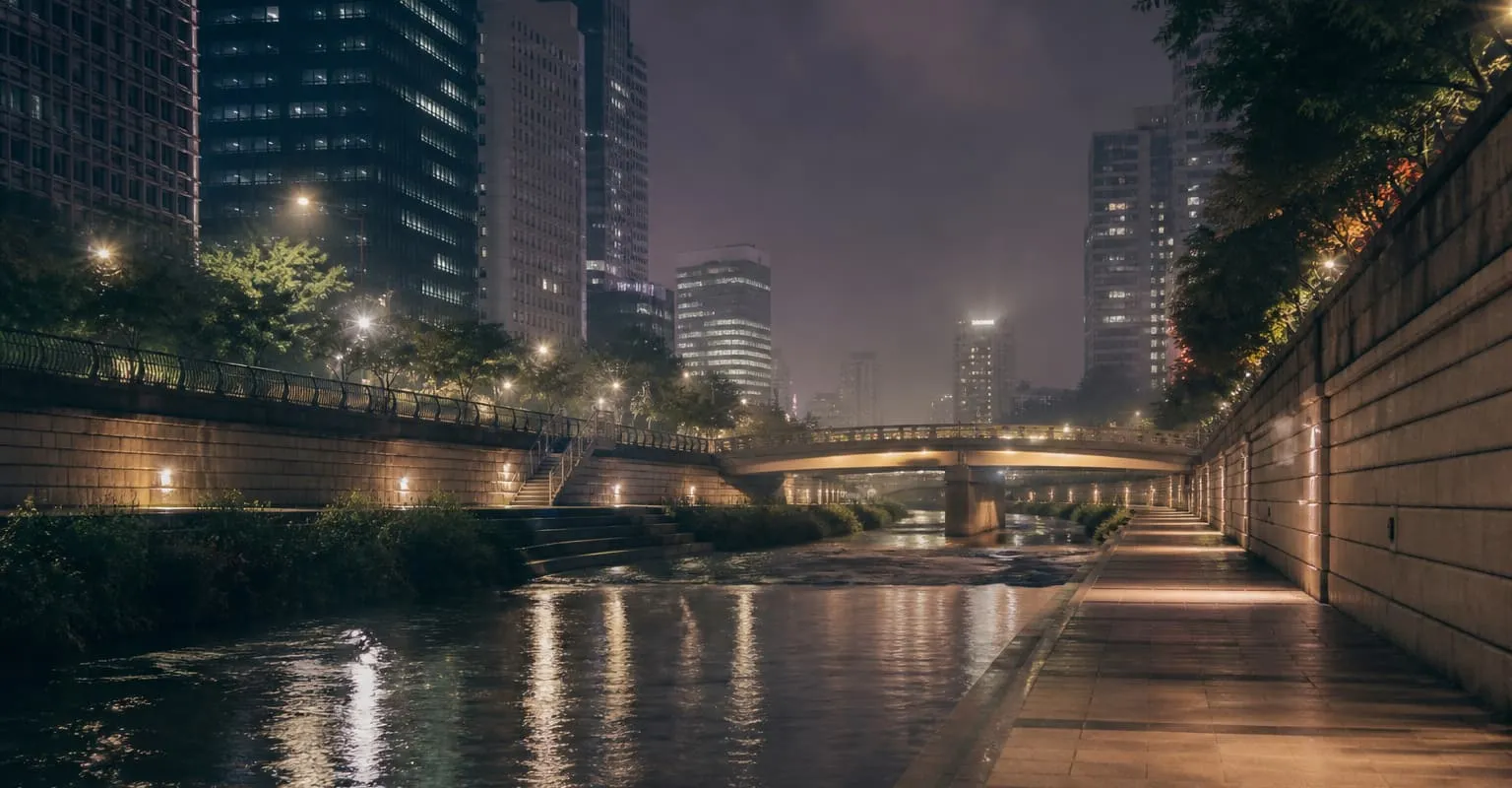
The country is not heating in one uniform way. On the KMA’s daily comparison, the Gyeongsang region carried the most severe daytime highs, while the greater Seoul area recorded the highest nighttime temperatures. Humidity made that split more consequential: in some Seoul neighborhoods, the apparent nighttime temperature did not drop below 30C.
The longer climate signal helps explain why the capital’s nights deserve separate attention. In KMA data comparing urban and nonurban areas across 1973–2024, daytime highs showed little difference, but city nighttime lows were 1.3C higher. Tropical nights occurred 2.2 times as often in urban areas. Clouds over central Korea can also suppress daytime sun while retaining heat overnight; forecasters described the effect as a blanket that prevents accumulated warmth from escaping.
The broader period has been unusually warm as well. The average daily temperature was 24.2C, second only to last year’s 24.8C in records dating to 1973. The North Pacific High is expected to expand, with experts warning that heat affecting both day and night could persist into September.
Why it matters outside Korea
For visitors, expatriates and employers managing people in Korea, a forecast centered on Daegu’s daytime maximum can miss the operational risk in Seoul metro. Poor overnight cooling can turn a normal-looking next-day schedule into a fatigue, hydration and sleep problem—especially for travelers crossing time zones, outdoor staff, and households in buildings that retain heat.
It also changes how to read a hot-week itinerary. The southeast may be the place to reduce midday exposure, while the capital may be the place where recovery after dark is least reliable. This is a public-health and logistics issue, not simply a seasonal discomfort story.
What travelers and expats should watch
- Run air conditioning or another safe cooling plan overnight where possible; do not assume a hotel room, officetel or apartment will naturally cool after sunset.
- Carry water and schedule shade breaks for daytime activity, especially in Gyeongsang and Daegu, where the strongest daytime heat is expected.
- Do not book dawn runs, hikes or outdoor commutes on the assumption that early morning will be cool; check the overnight low and humidity for the specific district.
- Split decisions by place and time: re-check southeast daytime forecasts and Seoul-area nighttime forecasts rather than relying on one national temperature headline.
Context
Read this as an overnight sleep-and-operations risk in the Seoul metropolitan area, not only a “Daegu daytime heat” story. The urban heat-island data show why a national average or a dramatic southern maximum can understate the conditions people actually recover in after work, travel or outdoor activity.
Korelay take
Read this as an overnight sleep-and-operations risk in the Seoul metropolitan area, not only a “Daegu daytime heat” story. The urban heat-island data show why a national average or a dramatic southern maximum can understate the conditions people actually recover in after work, travel or outdoor activity.
Editor note: Desk reporting supplies the timeline; Korelay adds the overseas behavior layer (what to change, what not to assume, what to re-check). If you only need the wire facts, open the primary link in Source.
Source
Korea JoongAng Daily: Heat wave pushes temperatures near 40C as Seoul sees record tropical nights — Korean-original desk piece translated with generative-AI assistance per the outlet’s note; paraphrased for briefing. Weather measurements attributed to the KMA.