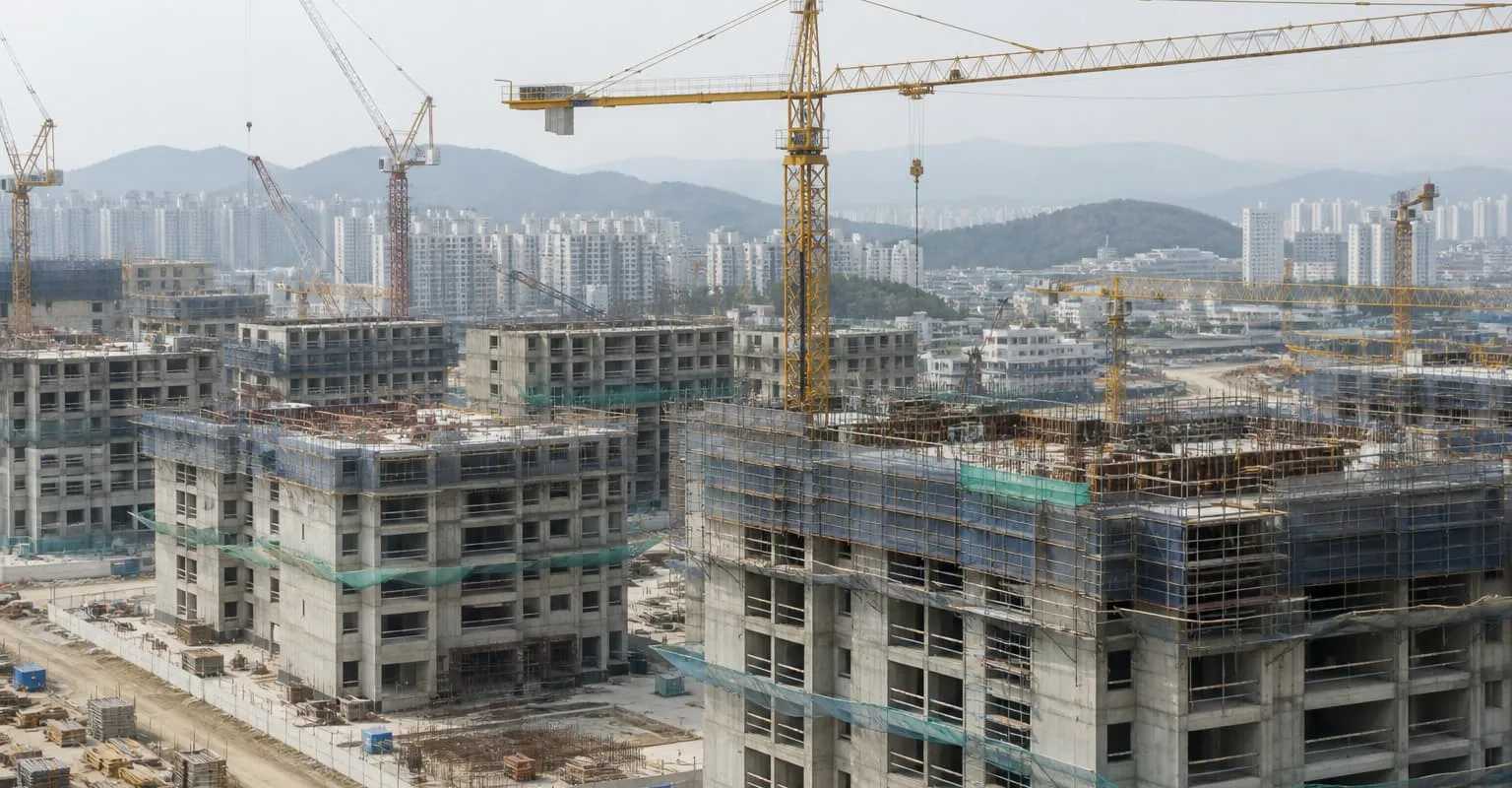
Korea society brief: 230,000-unit Seoul housing package — accelerate, don't invent
Aug 13 supply plan re-timelines Taereung, Gwacheon and public sites to 2029 — what renters and relocating workers should watch before treating the headline as near-term relief.
Source: The Herald Business
What happened
According to The Herald Business, the Ministry of Land, Infrastructure and Transport and related ministries unveiled an Aug. 13 “rapid housing supply” package aiming for more than 230,000 additional units in the greater Seoul area by 2030. The six-measure plan stresses faster ground-breaking on public sites, converting non-residential land to housing, accelerating already-sold apartment sites, bringing forward Jan. 29 package sites, expanding urban public housing mixed-use development, and advancing school-site and aging government-building redevelopments.
Named Jan. 29 sites being pulled forward include Taereung Country Club, the Gwacheon racecourse, the Defense Counterintelligence Command compound, Yongsan International Business District, and the Gangseo military site. Taereung and Gwacheon / Counterintelligence sites, once aimed at a 2030 ground-breaking, are now described as targeting September and December 2029, respectively.
The breakdown
Herald Business reporting stresses that much of the package accelerates previously announced projects rather than unlocking brand-new supply. Taereung, Gwacheon, and related urban sites already appeared in the Jan. 29 package; school-site and aging-building tracks largely rehash earlier announcements. Analysts cited in the piece put net new units among the 230,000-plus headline at roughly 120,000-plus — about half the figure the government presented — after counting overlap such as 15,000 of 30,000 non-residential conversion units already counted in the Sept. 7 package.
Public-housing timeline compression is a core claim: average development from candidate announcement to ground-breaking is to fall from 68 months to within 37 months, with 89,000 units at public housing sites targeted for ground-breaking by 2030 (accelerating an existing 48,000-unit plan and pulling forward 41,000 units once slated for 2031 or later). Pilot school mixed-use sites named include Gonghang High School in Gangseo (270 units), Suo High School (497) and Gwonseon 2 Middle School (276) in Suwon, and Hongi Middle School in Yongin (395). New aging-government sites include LH’s Seoul regional headquarters in Gangnam (250 units) and a LX regional headquarters in Suwon (200 units).
Market voices in the report remain skeptical on near-term relief: Real Estate 114’s Yun Ji-hae called the Jan. 29 1.4 million capital-region ground-breaking target already an “all-in” plan; Kim In-man noted construction still takes at least about four years even after ground-breaking; Song Seung-hyeon put Seoul’s annual need around 50,000–60,000 units and said this package has limits meeting that demand.
Why it matters outside Korea
If you are relocating to Seoul, renewing a lease, or advising staff who rent in the capital region, treat Aug. 13 as a timeline-politics day, not a keys-in-2027 day. Overseas HR and families often misread Korean “supply packages” as imminent inventory. Herald Business’s reporting points the other way: recycled sites, multi-year permitting, and local-government friction still sit between announcement and move-in.
What travelers and expats should watch
- Do separate ground-breaking dates (2028–2029 for several named sites) from move-in — the brief’s experts flag multi-year construction gaps even after shovels.
- Don’t assume the 230,000 headline equals net new homes; the desk’s net-new reading lands near ~120,000-plus after overlap.
- Expect jeonse / monthly-rent stress to stay the live market story while these sites run World Heritage reviews, relocations, and district plans — Taereung’s World Heritage impact assessment is still aimed at the second half of this year.
- Re-check employer housing support and lease renewals on current asking rents, not on 2030 package slides.
Context
Read this as acceleration theater on a recycled map, not as proof that Seoul’s rental squeeze ends this year. The wire will sell speed; Korelay’s frame is whether genuinely new supply appears — and when keys, not press conferences, arrive.
Source
The Herald Business: Gov’t touts 230,000-unit supply plan, but critics say it’s just old projects moving faster — paraphrased for briefing; AI-assisted English translation noted on the page. Soft briefing only — not personalized housing or investment advice.