Korea society brief: Nine of ten stranded Koreans evacuated from Nepal flood zone
Seoul says Nepal moved nine Doosan Enerbility workers by army helicopter while one manager and embassy staff stayed behind — plus nine other Koreans remain unaccounted for after floods.
Source: Seoul Shinmun · 정치
What happened
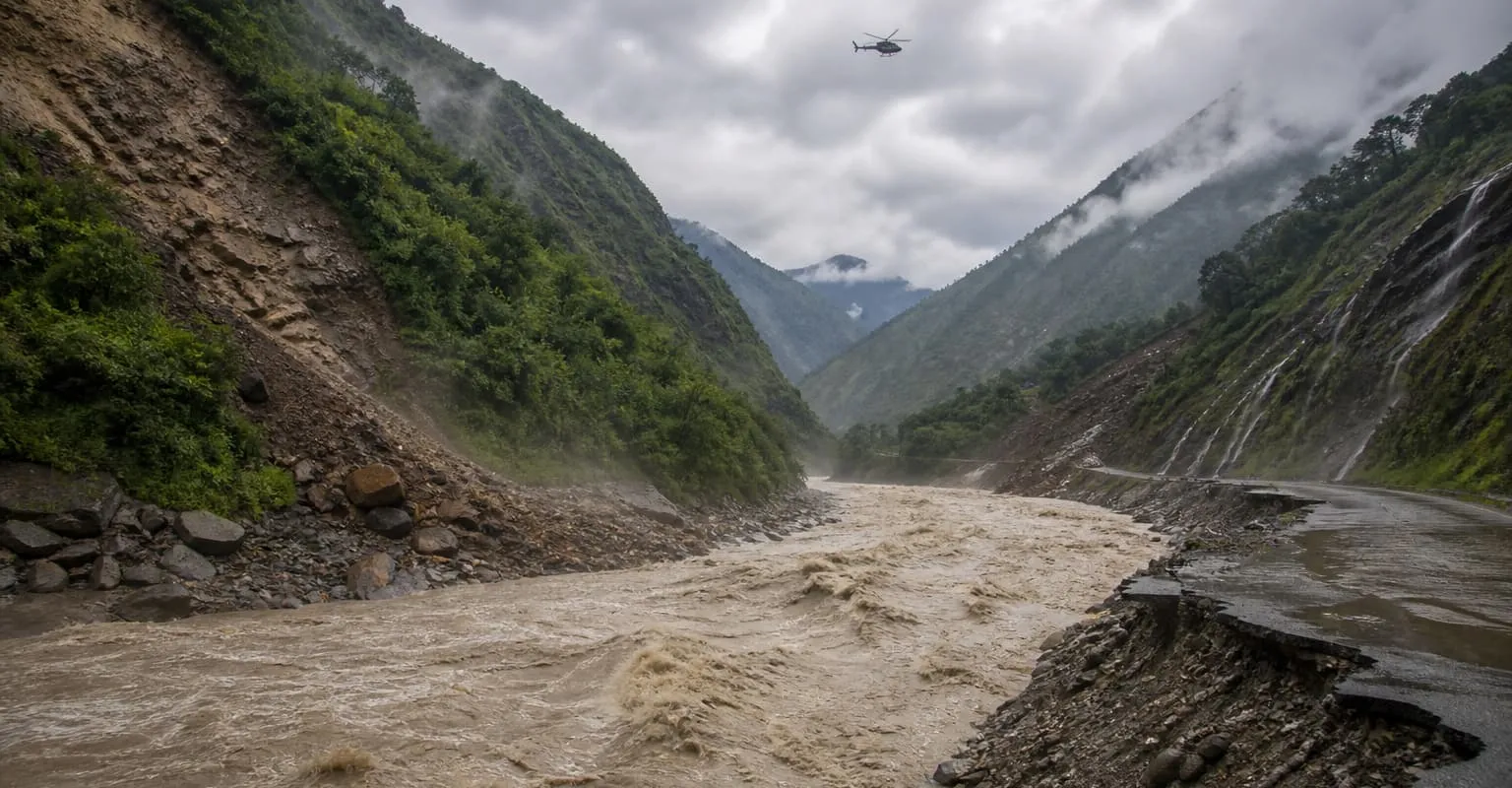
According to Seoul Shinmun, nine of ten South Korean nationals stranded by floods in Nepal have been moved to safer ground. On Aug. 27, the Ministry of Foreign Affairs (MOFA) said Nepalese authorities used military helicopters that day to evacuate nine Koreans who had been waiting for rescue.
The 10 are employees of Doosan Enerbility, a Korean energy equipment company with a field presence in Nepal. They had been at a temporary evacuation site alongside hundreds of other foreigners and local residents. One person — the Doosan Enerbility site manager — remained in the area, as did two embassy staff from the South Korean mission: a consular officer and an administrative employee.
Separately, MOFA said the whereabouts of nine other Koreans who lost contact during the disaster had not yet been confirmed, even after Nepalese search-and-rescue operations. Foreign Minister Cho Hyun spoke with Nepalese Foreign Minister Sishir Karki on the afternoon of Aug. 27, asking Kathmandu to give special attention and support to the swift and safe search and rescue of Korean nationals.
The breakdown
Three buckets are easy to conflate but are not the same story.
The Doosan group of 10: nine evacuated by helicopter; one site manager still on site; two embassy personnel also stayed. A MOFA official had said earlier that the group’s health was good and that they were receiving drinking water, food, and medical supplies.
The nine Koreans with lost contact: their locations remain unknown despite ongoing Nepalese rescue work. Seoul did not say in this report whether those nine overlap with the Doosan group.
The diplomatic lane: Cho’s call to Karki is the high-level ask for faster coordination. Helicopters moving nine people is concrete progress; the unlocated nine and the manager who stayed are the open items.
Why it matters outside Korea
Nepal’s monsoon floods hit corridors where Korean contractors, trekkers, and development workers routinely travel. For families abroad, the question is whether Seoul’s consular network can reach people when roads and phones fail together. For companies with Himalayan projects, it is a live test of duty-of-care chains: local site leadership, embassy staff, and host-government military lift capacity.
Korea does not operate Nepal’s helicopters or flood maps; it depends on host-country rescue priority and bilateral goodwill. That makes foreign-minister-level calls — not just social-media reassurance — the lever that moves seats on a military sortie.
What travelers and expats should watch
- Register with your embassy before remote travel. If you are heading to flood-prone districts during monsoon season, confirm whether Korean consular registration is current and keep a local SIM or satellite messenger as backup when roads wash out.
- Do not assume “nine evacuated” means “all Koreans accounted for.” MOFA’s update leaves nine other nationals unlocated and one Doosan manager plus two embassy staff still in the affected zone — check official MOFA or embassy channels, not reposted totals from aggregators.
- Track employer field policies if you work for EPC or energy contractors. A site manager staying behind signals that commercial operations and consular evacuation can diverge; know what triggers shelter-in-place versus helicopter extraction.
- Build a household contact tree for overlapping crises. Cho’s outreach helps at the government level; families still need one named contact in Korea who can relay verified MOFA updates.
Context
Read this as a partial evacuation success with a still-open missing-persons file, not as proof that every Korean in Nepal is safe or that the disaster phase is over. Helicopter lifts move labeled groups fast; lost-contact cases and staff who stay for site duty are what consular desks lose sleep over — and what expats should plan for when “most of the team” is already out.
Source
Seoul Shinmun: 외교부 “네팔 고립 국민 10명 중 9명 안전지역 이송” — Korean original; paraphrased for briefing; read the original for full detail.