Korea society brief: migrant heat deaths that official tallies miss
A Thai day laborer’s July death in Haenam sat outside KDCA’s heat-death count — and why summer farm work in Korea is a counting problem, not only a weather story.
Source: Hankyoreh
What happened
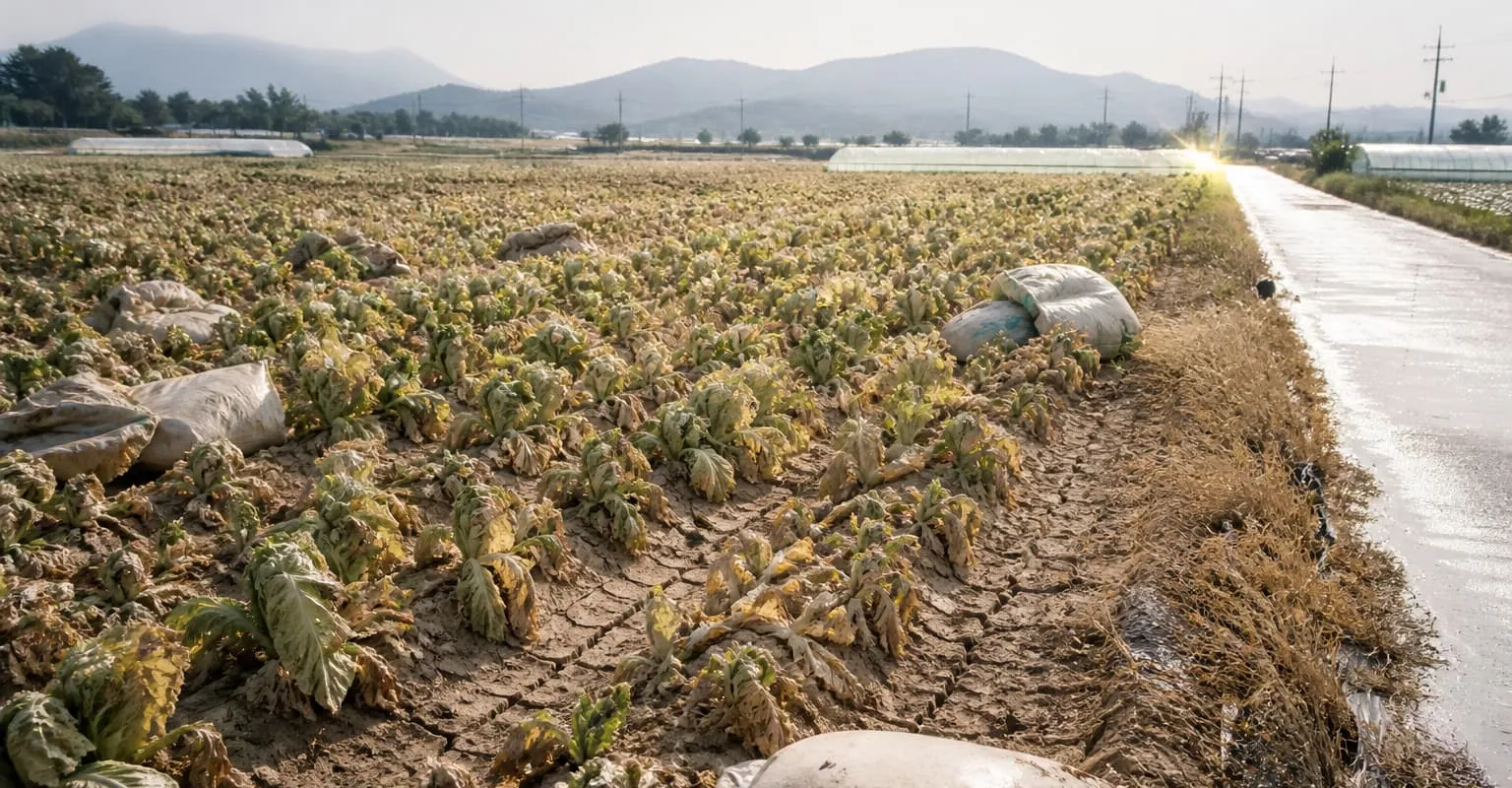
According to the Hankyoreh, Thai day laborer Nakhon Saensawat (a pseudonym), 37, collapsed around 3 p.m. on July 25, 2026, while fertilizing a cabbage field in Hwangsan, Haenam County, South Jeolla Province. He had arrived in Korea on a tourist visa on July 20 — six days before he died. His wage for a 7 a.m.–5 p.m. day was 110,000 won.
When the ambulance arrived, air temperature was 33.3°C and ground temperature exceeded 50°C. A paramedic’s thermometer displayed HI, meaning body temperature was above 42°C and could not be read precisely. Haenam police told the Hankyoreh the official autopsy was still being processed; a senior officer said site temperatures above 43°C supported assuming a heat-related illness. As of Aug. 9, the Korea Disease Control and Prevention Agency (KDCA) had counted 30 heat-related deaths nationwide this summer — and Nakhon was not among them. Haenam County said he was not under the seasonal-worker program and that it was not in a position to provide support or reparations.
The breakdown
The undercount is structural, not a one-off paperwork miss. Hankyoreh reporting notes that KDCA heat-death figures rely on voluntary reports from 516 emergency rooms, so people outside that net can vanish from the tally. Statistics Korea’s cause-of-death statistics reflect Korean nationals only.
Detailed KDCA data obtained by the Hankyoreh show that as of Aug. 3, 8 of 17 counted heat deaths (47%) followed outdoor work such as field labor. The paper names at least four migrant outdoor deaths this summer: a Vietnamese worker in Goesan on July 4; a Nepalese worker in Hongseong on July 11; a Chinese worker in Yesan who lost consciousness on July 26 and died the next day; and Nakhon in Haenam on July 25. Small farms with fewer than five regular employees often sit outside the Labor Standards Act (break rules) and the Occupational Safety and Health Act (safety training) — floors English readers may assume cover “work in Korea.”
Why it matters outside Korea
If you hire Korea farm help informally, send relatives into day-labor agriculture, or plan a “tourist visa plus summer field work” path, the operational fact is that heat risk and statistical visibility are not the same system. A death can be real, investigated locally, and still miss the national heat-illness ledger headlines cite. County heat alerts and village broadcasts do not substitute for shade, cooling housing, or stop-work rules on small outdoor sites.
For NGOs, embassies, and overseas families, treat KDCA summer death totals as a lower bound for outdoor migrant exposure — not a complete census.
What travelers and expats should watch
- Visa status ≠ job safety: tourist-visa day labor on small farms can sit outside seasonal-worker county support and outside OSH floors for larger workplaces — do not assume a heat warning equals a stop-work order.
- Housing and midday heat: overnight spaces without fans or air conditioning compound next-day field exposure; treat cooling and hydration as hard constraints.
- If someone collapses outdoors: call emergency services early; ground above 50°C and body readings above 42°C are life-threatening windows, not “wait it out” symptoms.
- For employers and brokers: informal field hires still carry heat-stroke risk; shade, rest, and cooling are the behavior change — not “we sent alerts.”
Context
Read this as a counting and coverage gap, not only a tragic heat-wave anecdote. The wire-adjacent frame is “another migrant dies in the heat.” The Korelay frame: Korea’s published heat-death number can miss the workers most exposed on small outdoor sites, so “30 deaths” is not the full picture for anyone who touches informal farm labor here.
Source
Hankyoreh: Another migrant worker dies in Korea’s heat wave. How many more deaths go uncounted? — paraphrased for briefing from the English edition; read the original for full detail. Sensitive death coverage: pseudonym retained as in the primary.