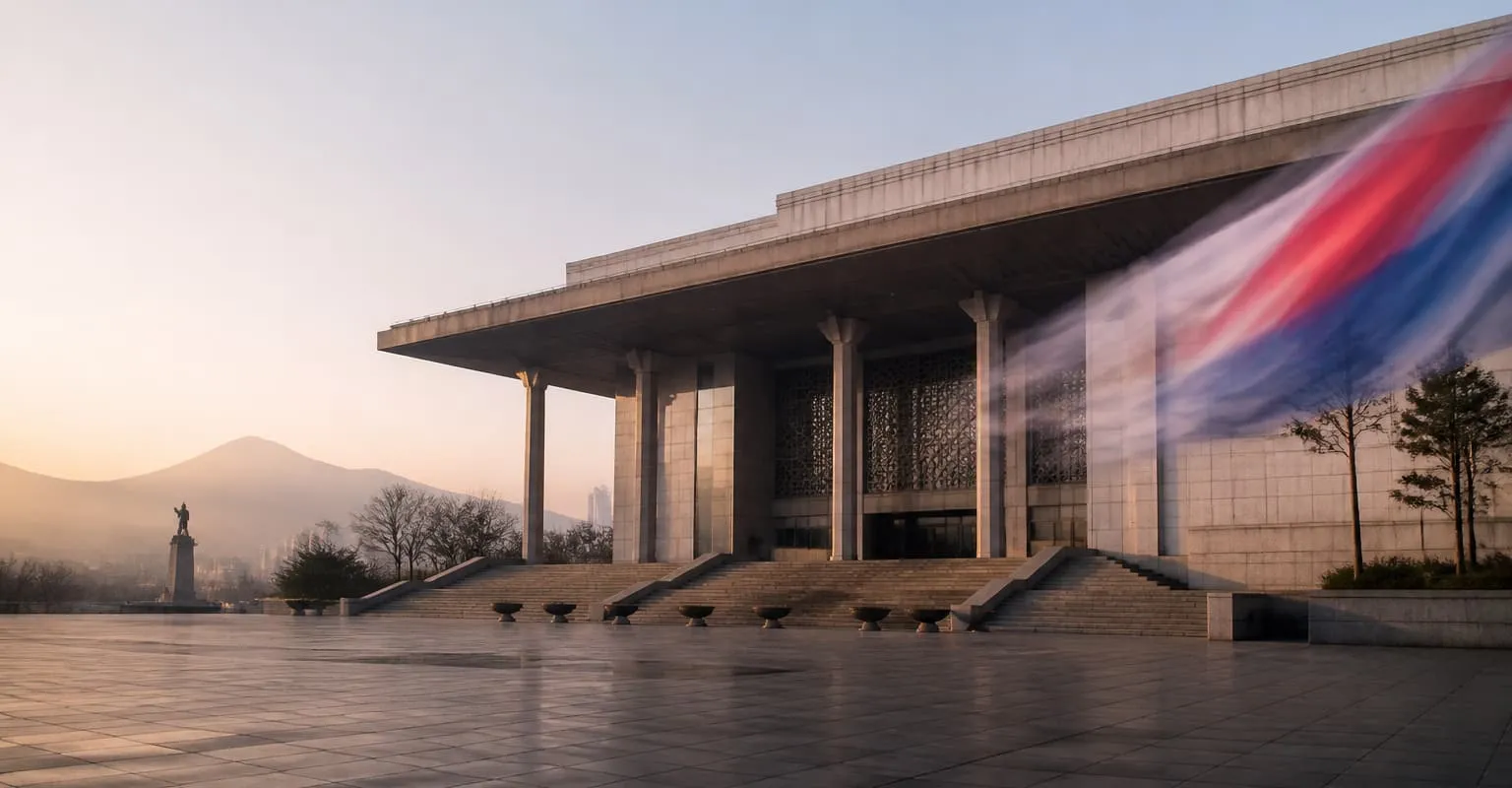
Korea society brief: Lee's Liberation Day push for peninsula peace talks
On the 81st Liberation Day, President Lee Jae-myung urged parties to open talks to end the long war and curb North nuclear advances — what that changes for Korea-touching watchers.
Source: CHOSUNBIZ
What happened
According to CHOSUNBIZ, President Lee Jae-myung used his 81st Liberation Day address on Aug. 15 at the Sejong Center for the Performing Arts in Jongno-gu, Seoul, to call for talks that would settle peace on the Korean Peninsula. He said parties should “put down our mutual intent to threaten each other and begin talks among the parties to end the long war,” and that such talks could also cover “effective measures to halt the North’s advancement of its nuclear capabilities.”
Lee framed peninsula peace as a Northeast Asia stabilizer and “a milestone toward a world without nuclear weapons.” He said Seoul would “end the war and embark on a journey to transform the Peninsula’s unstable armistice regime into a peace regime,” and that peaceful South–North coexistence is an essential condition for national prosperity — not growth alone under an unstable order.
The breakdown
CHOSUNBIZ’s English rendering of the speech (AI-translated from the Korean original) splits the operational message from anniversary rhetoric.
- From principles to a blueprint: Lee recalled last year’s pledge to respect the North’s system, reject absorption unification, and avoid hostile acts — then said he would move “beyond principles to implementation.”
- Three coexistence tracks: inclusive (mutual respect), stable (making fighting unnecessary), and responsible (contributing to world peace). He urged reducing hostility in “perceptions, norms, and institutions” and sitting “face to face.”
- Tension controls: systems to manage inter-Korean conflict plus “multiple layers of safeguards” against crisis escalation, aimed at drawing a Northern response and building a more stable peninsula.
- History lane, not only Pyongyang: He tied the June Pro-Japanese Property Reversion Act to investigating and recovering assets “unjustly amassed by pro-Japanese anti-national collaborators,” with reverted funds directed to independence patriots and bereaved families.
- Japan track: Cooperation with Japan is “more important than ever,” but trust needs sincerity about victims who still live with past wounds; he invoked the 1998 Kim Dae-jung–Obuchi joint declaration as a model for facing the past while opening “a new 60 years” as a closer neighbor.
Why it matters outside Korea
If you fly in, ship in, invest through, or brief boards on Korea risk, Liberation Day speeches are usually atmosphere. This one is a policy signal stack: armistice-to-peace-regime language, explicit nuclear-halt talk as a negotiation topic, and a Japan trust line that can move markets and alliance chatter even before any North response exists. Overseas readers should update calendars for rhetoric-to-implementation watches — not for an immediate peace treaty.
Alliance and Japan desks also need the dual track: a North invitation plus history politics (property reversion, Japan empathy language) that can spill into business and diaspora talk the same weekend.
What travelers and expats should watch
- Do treat Aug. 15 language as signaling, not as a signed deal — re-check embassy/alliance briefings before changing “peace regime” assumptions.
- Do expect Korea–Japan headlines to mix cooperation talk with historical accountability in the same cycle.
- Don’t read “talks among the parties” as proof Pyongyang has agreed to sit down — CHOSUNBIZ reports Lee’s ask, not a Northern acceptance.
- Expect follow-ups on whether “preemptive and sustained peace measures” become proposals or stay speech-day framing.
Context
Read this as a Liberation Day implementation blueprint for peace talk and history politics, not as confirmation that the armistice is ending. Korelay frame: the wire gives you the podium quotes; the overseas behavior update is to separate invitation language from verified reciprocal moves — and to watch the Japan/history lane as closely as the North lane, because both landed in one address.
Source
CHOSUNBIZ: Lee’s Liberation Day peace-talk address — paraphrased from the English edition (AI-translated from Korean); read the original for full wording. Not a Yonhap primary.