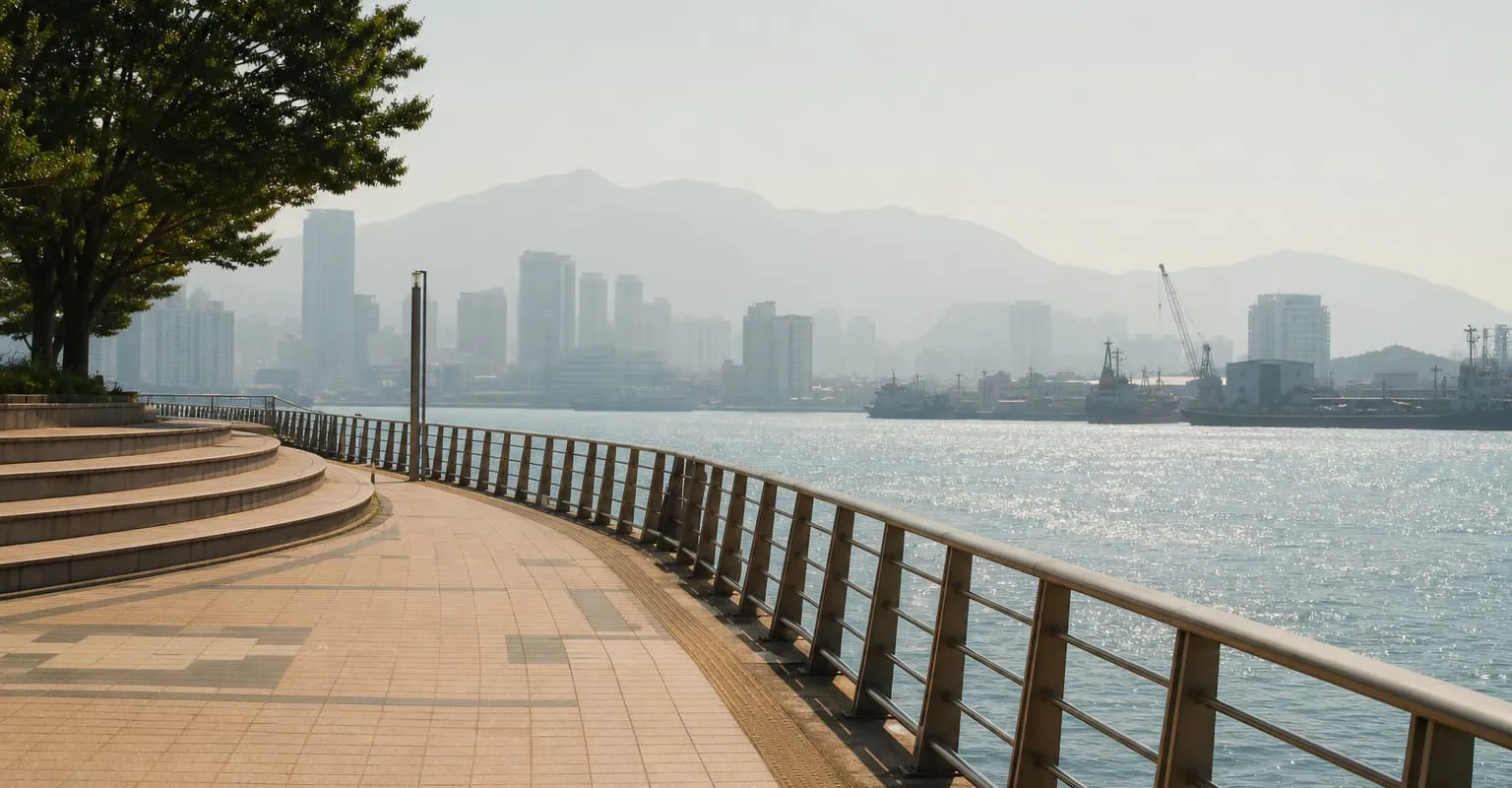
Korea society brief: Busan and Yangsan hit all-time heat highs
Yangsan 40.3C and Busan 38.8C set records as Seoul upgrades to heat-wave warning.
Source: Yonhap News Agency
What happened
Southeastern South Korea recorded exceptional daytime heat on Wednesday, while Seoul moved into a stronger heat-alert posture. Yangsan reached 40.3C at 3:34 p.m., the highest temperature recorded there since the weather agency began collecting local data in 2008, Yonhap News Agency reported.
Nearby Busan reached 38.8C at 2:56 p.m. That surpassed its previous record of 37.3C, set in 2016, and marked the port city’s highest temperature since weather tracking began in 1904. Yonhap described it as Busan’s all-time high in 122 years. The Korea Meteorological Administration attributed the heat wave to the combined influence of the North Pacific High and the Tibetan High pressure systems and projected that it would continue through the end of next week.
The breakdown
Yangsan’s record did not emerge from an ordinary warm day. The city had registered 39.3C on Sunday, matching the record set in 2024, before Wednesday pushed the local maximum a further 1.0C higher. The two southeastern readings make the regional part of this story specific: Yangsan has a modern station record, while Busan has a much longer weather record behind its new high.
The capital was dealing with a different operational threshold. Earlier Wednesday, the KMA upgraded a heat-wave advisory to a full warning for eastern and southwestern parts of Seoul, the city’s second heat-wave warning this summer. A warning is issued when the maximum apparent temperature is expected to remain above 35C for two or more consecutive days. Southern Seoul’s apparent temperature reached 35.1C at 3 p.m.
Seoul responded by opening local administrative offices for public cooling around the clock. It also restricted outdoor work at municipal construction sites from 2 to 5 p.m. and recommended that private construction sites follow the same hours. These measures are distinct from the temperature records: they show how the warning is affecting city operations.
Why it matters outside Korea
For visitors, residents, employers, and logistics teams, Wednesday’s facts combine a southeast daytime-record event with a capital-city heat-warning response. That is more useful than treating the report as another generic summer-heat update. A traveler moving between Seoul and the Busan area may encounter both different record histories and different operational responses, even under the same broader heat pattern.
The forecast through the end of next week means that a single afternoon’s thermometer reading should not be used as the whole risk assessment. Apparent-temperature alerts, work restrictions, and access to cooling spaces can alter how a day in the city is managed. The reported conditions are weather and public-safety information, not a claim that every trip or outdoor plan must be abandoned.
What travelers and expats should watch
- Move outdoor plans away from the afternoon: in Seoul, municipal construction work is restricted from 2 to 5 p.m.; use those hours as a practical cue to avoid strenuous outdoor activity where possible.
- Locate a cooling option before heading out: Seoul has opened local administrative offices for public cooling around the clock, so identify a nearby indoor stop if you will be outside for long periods.
- Check apparent-temperature warnings, not only air temperature: Seoul’s full warning is tied to apparent temperature remaining above 35C for two or more days.
- Recheck southeast plans daily: Yangsan and Busan set record highs Wednesday, and the KMA expects the heat wave to continue through the end of next week.
Context
Read this as a southeast daytime-record and capital warning-operations day, not a rewrite of Korelay’s July 28 tropical-nights brief (overnight lows ≥25C and Seoul sleep risk) or the July 27 “heat beyond Daegu” warning-map update. Those pieces cover nights and corridor alerts; Wednesday adds Busan/Yangsan all-time daytime maxima plus Seoul’s 2–5 p.m. municipal work restriction and round-the-clock cooling offices. For Korea-touching plans, check local warnings, afternoon exposure, and cooling access—not a single national heat headline.
Korelay take
Read this as a southeast daytime-record and capital warning-operations day, not a rewrite of Korelay’s July 28 tropical-nights brief (overnight lows ≥25C and Seoul sleep risk) or the July 27 “heat beyond Daegu” warning-map update. Those pieces cover nights and corridor alerts; Wednesday adds Busan/Yangsan all-time daytime maxima plus Seoul’s 2–5 p.m. municipal work restriction and round-the-clock cooling offices. For Korea-touching plans, check local warnings, afternoon exposure, and cooling access—not a single national heat headline.
Editor note: Desk reporting supplies the timeline; Korelay adds the overseas behavior layer (what to change, what not to assume, what to re-check). If you only need the wire facts, open the primary link in Source.
Source
Yonhap News Agency: Temperatures hit all-time highs in southeast amid nationwide heat wave — paraphrased for briefing; read the original for full detail.