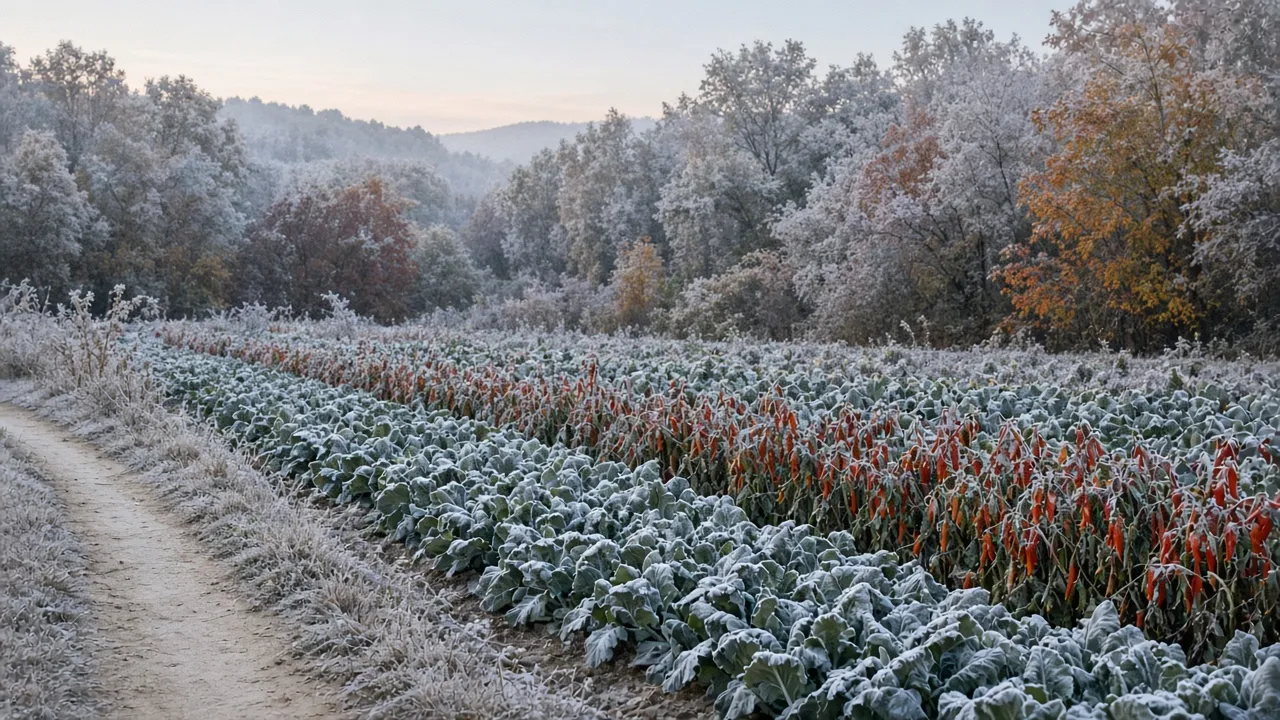
Korea travel brief: Inje wakes to frost while Champi throws rain at Jeju
Korea Herald: Gangwon frost and a Seoul low of 6.6 C on Oct. 23, with ~15 C day-night swings. Typhoon Champi is not a direct hit, but Jeju is tagged for 50–150 mm and the south for weekend rain.
Source: The Korea Herald
What happened
Friday morning, Oct. 23, 2026, South Korea’s northeast looked like winter had arrived early, The Korea Herald reported from the Korea Meteorological Administration. Frost covered cabbage and chili-pepper fields, trees, and grass in Inje County, Gangwon. Temperatures fell below 10 C across most regions. Seoul’s low was 6.6 C. Parts of northern Gyeonggi and inland Gangwon dipped below 5 C.
The same morning was not an all-day freeze. Afternoon highs were forecast at 18–23 C, a swing of about 15 C from night to day — the number the KMA wanted people to plan around.
Separately, Typhoon Champi, moving north from the western Pacific, was expected to pass Taiwan and then head toward Japan’s Kyushu. The Herald says it is not expected to hit the Korean Peninsula directly. Indirect rain: Jeju later Friday afternoon, southern regions Saturday, Chungcheong Sunday. Jeju 50–150 mm (higher in some spots); Gwangju, South Jeolla, and South Gyeongsang 20–60 mm.
The breakdown
This is two weather stories on one date, and mixing them is how people pack wrong.
The frost story is Gangwon / northern interior, plus a cold Seoul dawn. It is a layer and a field problem: outdoor markets, dawn hikes, and anyone sleeping in an unheated minbak. Inje’s cabbage and pepper fields in the Herald photos are the agricultural tell — first frost on a crop you can still see in the ground.
The Champi story is rain on Jeju and the south, not a Seoul typhoon holiday. “Not a direct hit” still means 50–150 mm on Jeju. That is a canceled ferry / delayed flight / indoor Plan B number, not a picturesque shower.
Eleven days earlier, Seoul had logged a 30.1 C October record. The month is not “warm” or “cold.” It is bimodal. If your itinerary assumed a single autumn uniform, the uniform lost.
Why it matters outside Korea
Weekend visitors split between Seoraksan / Inje and Jeju are looking at opposite kits. Northeast: frost, ice, a 15-degree swing. Island and south: Champi’s rain shield. A single Facebook “Korea weather” screenshot will lie to one of those groups.
If you import Korean produce or visit farmstays in Gangwon, first frost on cabbage and peppers is a harvest and greenhouse cue, not just a pretty leaf. If you hold a Jeju Saturday, the rain band is the decision, not the typhoon’s Japanese landfall.
What travelers and expats should watch
- Do pack a warm morning layer for Seoul and Gangwon even if the afternoon still looks like mid-autumn. 6.6 C at dawn and 18–23 C later is the swing the KMA flagged.
- Don’t keep a Jeju outdoor Saturday without a rain backup. 50–150 mm is a washout range, even when the storm’s center is aimed at Kyushu.
- Check ferries and domestic flights Friday night if you are island-hopping; indirect typhoon rain hits terminals before it hits your hotel review.
- Drivers on inland Gangwon dawn roads: frost on fields means frost on untreated stretches. Leave the “it’s only October” speed at the rest stop.
Context
Read this as a split-map morning — frost inland, rain on the island track — not as “winter has started” and not as a Champi landfall on Korea. Korelay’s frame: late October 2026 is teaching the same lesson twice, heat then cold: dress for the 48-hour KMA map of the place you will actually stand, not for the month’s brand.
Source
Primary: The Korea Herald, Oct. 23, 2026 (Choi Jae-hee; KMA figures). Korelay paraphrase for packing and routing. Check the live forecast before you leave the hotel.