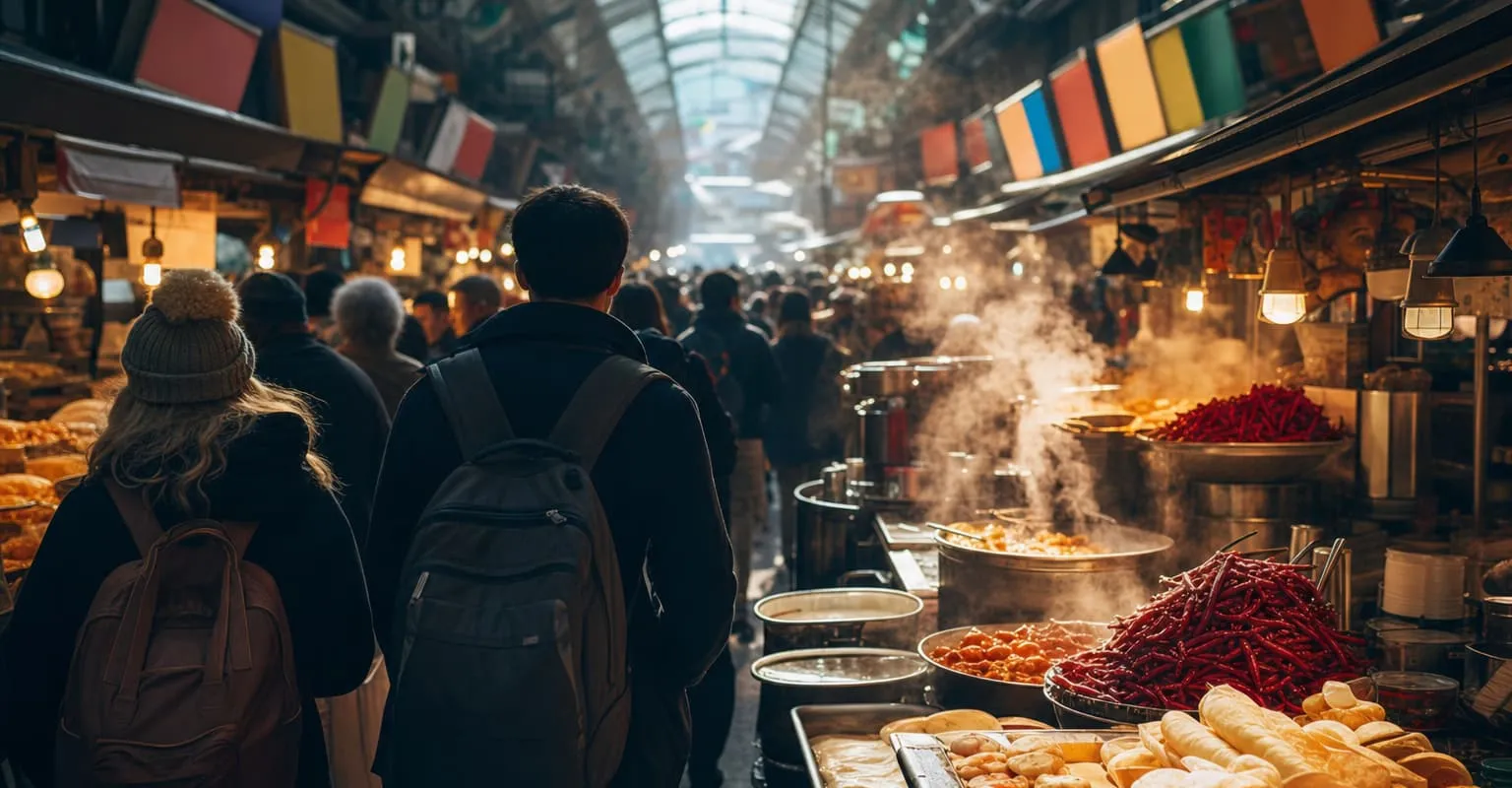
Korea food & travel brief: Seoul tourists stretch into markets and ridges
DDP and Mount Acha led 2025 foreign-visitor growth — Myeongdong still wins volume, but trails and Gwangjang are accelerating.
Source: Yonhap News Agency
What happened
According to Yonhap, a Seoul AI Foundation report shows foreign tourists in Seoul increasingly visiting traditional markets and hiking spots, expanding beyond the city’s older attraction set. The foundation analyzed foreign pedestrian traffic from SK Telecom plus Google Maps review data for 16 major Seoul attractions in 2025.
Year-on-year foreign-visitor growth leaders: Dongdaemun Design Plaza (DDP) +12.1%, Mount Acha +11.8%, then Hongdae and Naksan Park (both +10.5%), Gwangjang Market (+10.4%), Gyeongbok Palace (+10.2%), and Mount Gwanak (+10%).
The breakdown
Growth and volume are different stories:
- Highest daily average foreign floating population: Myeongdong 100,910; N Seoul Tower 57,370; Samseong/COEX 46,813; Gangnam Station 41,210; Hongdae 40,213.
- Highest foreign share of total floating population: N Seoul Tower 55.7%; Myeongdong 47.1%.
- Hiking daily foreign averages: Mount Bukhan 4,015; Mount Bukak 2,169; Mount Gwanak 1,192; Mount Acha 729.
So the viral framing — “markets and hikes” — is about acceleration. The mass still concentrates in Myeongdong and the tower belt.
Why it matters outside Korea
English itineraries still overbuild day one around neon shopping and palace photos. Local data says second-layer demand is real: market food halls and metro-accessible ridges. That changes packing lists (trail shoes), timing (early market mornings), and expectations (queues at Gwangjang are not a secret hack anymore).
It also helps second-time visitors. If you already did Myeongdong, the growth names — DDP, Acha, Naksan, Gwangjang, Gwanak — are a better remix than another department-store lap.
What travelers and expats should watch
- Volume vs. growth: Myeongdong can still feel more crowded than Acha even if Acha’s percentage jump is hotter.
- Market etiquette: sijang (시장) mornings reward small purchases, tray returns, and not blocking grill lines for photos.
- Hike reality: Bukhan/Bukak/Gwanak/Acha are city-adjacent, not remote national-park expeditions — still bring water and decent shoes.
- Data caveat: mobile floating population is a proxy, not ticket counts.
Context
Korelay’s take: Seoul is not “abandoning” Myeongdong. It is adding a second tourist grammar — design-complex days, market lunches, ridge sunsets — on top of the classic funnel. Plan for both, or you will fight the old crowds and miss the new ones.
Practical packing note for overseas visitors: trail shoes and a translation app now belong in the same kit as the Myeongdong day plan. Growth is at the edges; volume is still at the center.
Korelay take
Korelay’s take: Seoul is not “abandoning” Myeongdong. It is adding a second tourist grammar — design-complex days, market lunches, ridge sunsets — on top of the classic funnel. Plan for both, or you will fight the old crowds and miss the new ones.
Practical packing note for overseas visitors: trail shoes and a translation app now belong in the same kit as the Myeongdong day plan. Growth is at the edges; volume is still at the center.
Editor note: Desk reporting supplies the timeline; Korelay adds the overseas behavior layer (what to change, what not to assume, what to re-check). If you only need the wire facts, open the primary link in Source.
Source
Yonhap: Foreign tourists increasingly flock to Seoul’s markets, hiking spots — paraphrased for briefing; read the original for full detail.