Korea culture brief: September madang theater festivals split between Gwangmyeong stadium and Cheongju palace
Dong-A Ilbo reports two ARKO Summer Festa madang theater events in early September — the 36th Korea Madang Theater Festival at Gwangmyeong Citizens' Stadium and the 22nd Rural Excellent Madang Theater Grand Feast at Cheongju's Chojeong Palace.
Source: Dong-A Ilbo · 문화연예
What happened
According to Dong-A Ilbo, September 2026 brings two madang theater (마당극) festivals under Arts Council Korea’s ARKO Summer Festa — one at a Gyeonggi city stadium, one at a Cheongju palace courtyard. Jeong Seung-cheon, chairman of the Korea Madang Theater Association, told Dong-A that madang theater completes its work with the audience playing alongside performers, not merely watching from seats.
The 36th Korea Madang Theater Festival runs September 11–13 at Gwangmyeong Citizens’ Stadium in Gyeonggi. The 22nd Rural Excellent Madang Theater Grand Feast runs September 4–6 at Chojeong Palace in Cheongju, North Chungcheong. Dong-A published the report on August 26.
The breakdown
Dong-A frames the pair as a city–countryside double bill:
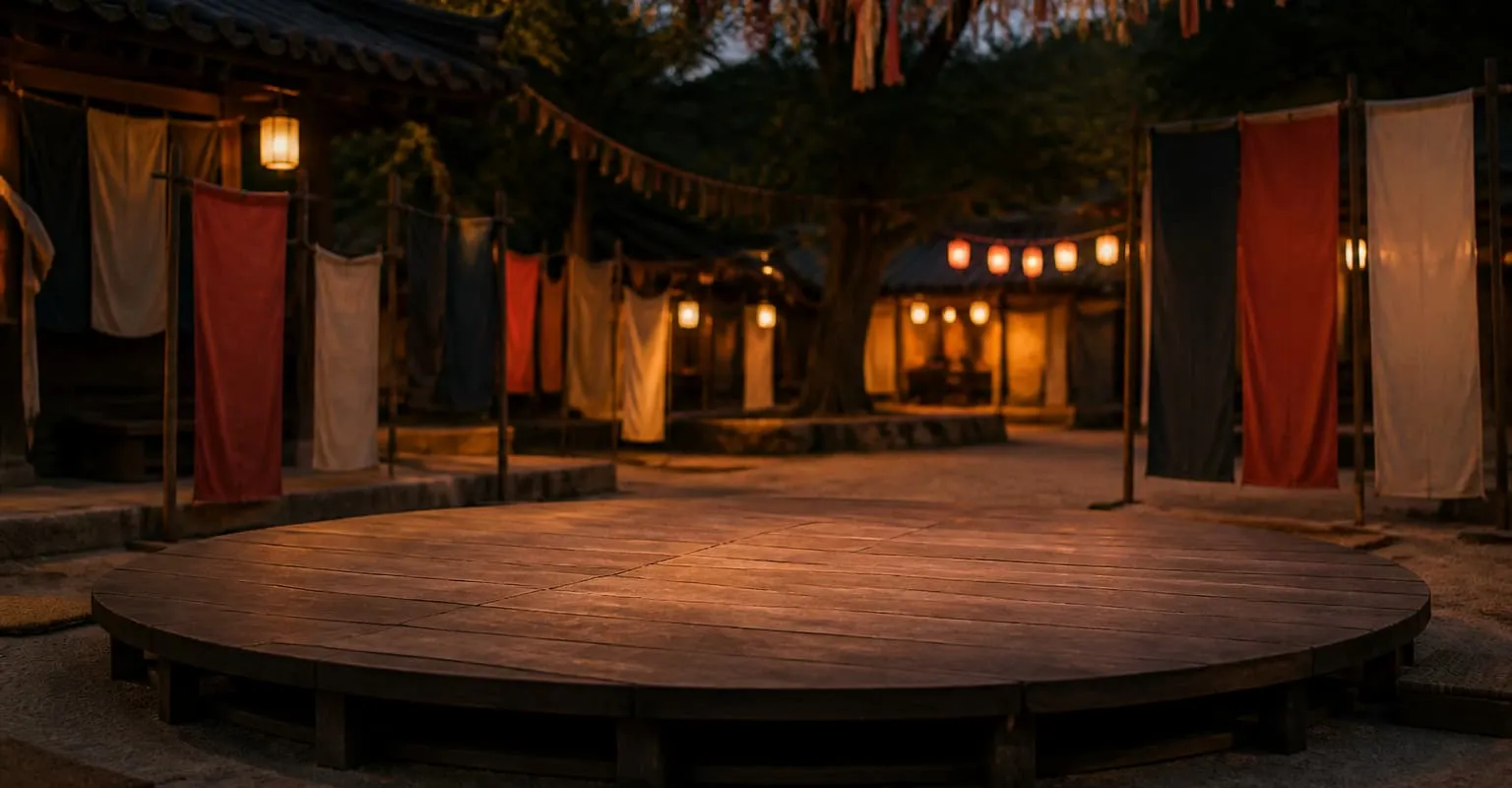
- Gwangmyeong (Sept 11–13): Third year at the stadium. Jeong’s line — “In the city, even a stadium is a madang” — anchors the format. Outdoor spaces, indoor theaters, and street corners host creative madang theater, yeonhee (연희), magic, and mime on large and small circular stages. Invited troupes include Geodol’s “Pumbapumba” and Jeongseon Arirang’s “Tteotkkun.”
- Cheongju (Sept 4–6): Theme “Let’s play together in the madang.” Listed shows include Neoul’s “Yonggi Play,” “Tongyeong Ogwangdae,” and “Deongsil Deongsil Kkaebi Kkaebi.” Troupes perform in regional dialects — Chungcheong, Busan, Jeolla, and Jeju.
- Hands-on extras (Cheongju): Lantern, sotdae, and daenggi making, hanbok try-ons, calligraphy, and fan painting. A shuttle bus for rural elderly residents runs on September 4.
Jeong traces the form to traditional yeonhee and talchum (mask dance) but stresses minimal stage furniture: one spectator might stand in as a cabbage field, elders sometimes dance with actors in the yard, and two onstage audience members became a real-life couple. He flags “citizen madang theater” as a highlight.
Kim Chang-gon of Arts Factory Dure says the rural feast began by busing farming villages for meals and performances; it now draws families for a full day. He cites “Yeomjaengi Yoo” — a bereaved spectator cried from start to finish — and defines the audience as co-creators who can redirect the show.
Ticket prices and daily schedules are not reported.
Why it matters outside Korea
Madang theater is one of Korea’s least exported stage forms — not a seated proscenium concert but a participatory village-square grammar ARKO is routing through a metropolitan sports ground and a Joseon-era palace yard. For travelers tracking intangible heritage beyond palace tours, Dong-A’s calendar concentrates audience-invited performance in two geographies roughly an hour apart by train. The citizen madang theater thread also ties the festivals to neighborhood and aging-policy conversations, not only folklore nostalgia.
What travelers and expats should watch
- Cheongju first (Sept 4–6): Chojeong Palace offers family day-trip programming, craft booths, and a rural-elder shuttle on opening day. Treat the dialect-forward lineup as part of the experience.
- Gwangmyeong second (Sept 11–13): Gwangmyeong Citizens’ Stadium packs outdoor circular stages, indoor halls, and street corners into one metro-adjacent venue — madang theater without leaving Greater Seoul.
- Participation norms: Spectators may be called into the circle; improvisation and emotional audience reactions are normal, not accidents — Western fourth-wall etiquette may not apply.
Context
Read this as ARKO-funded participatory folk theater with a September city–country split, not a single ticketed drama season or a heritage museum demo. Dong-A’s through-line — “In the city, the stadium is the madang; in the countryside, the palace yard is the feast” — is the insight: Korea is staging the same audience-co-authored form in two infrastructures built for opposite daily life, betting that immediacy beats spectacle.
Source
Dong-A Ilbo · 문화연예: “9월 도시에서 농촌에서 한판 크게 벌어진다!” — Korean original; dates, venues, festival editions, troupe names, themes, ARKO Summer Festa framing, and Jeong/Kim quotations from Dong-A; paraphrased for briefing; read the original for photos and full Korean text.