Korea business brief: US polysilicon tariff narrows China’s price edge — for now
Times maps Trump’s 15% polysilicon-derivative tariff and MIPs — Hanwha and OCI gain room vs China, while Dec. 4 and US onshoring set the real clock.
Source: The Korea Times
What happened
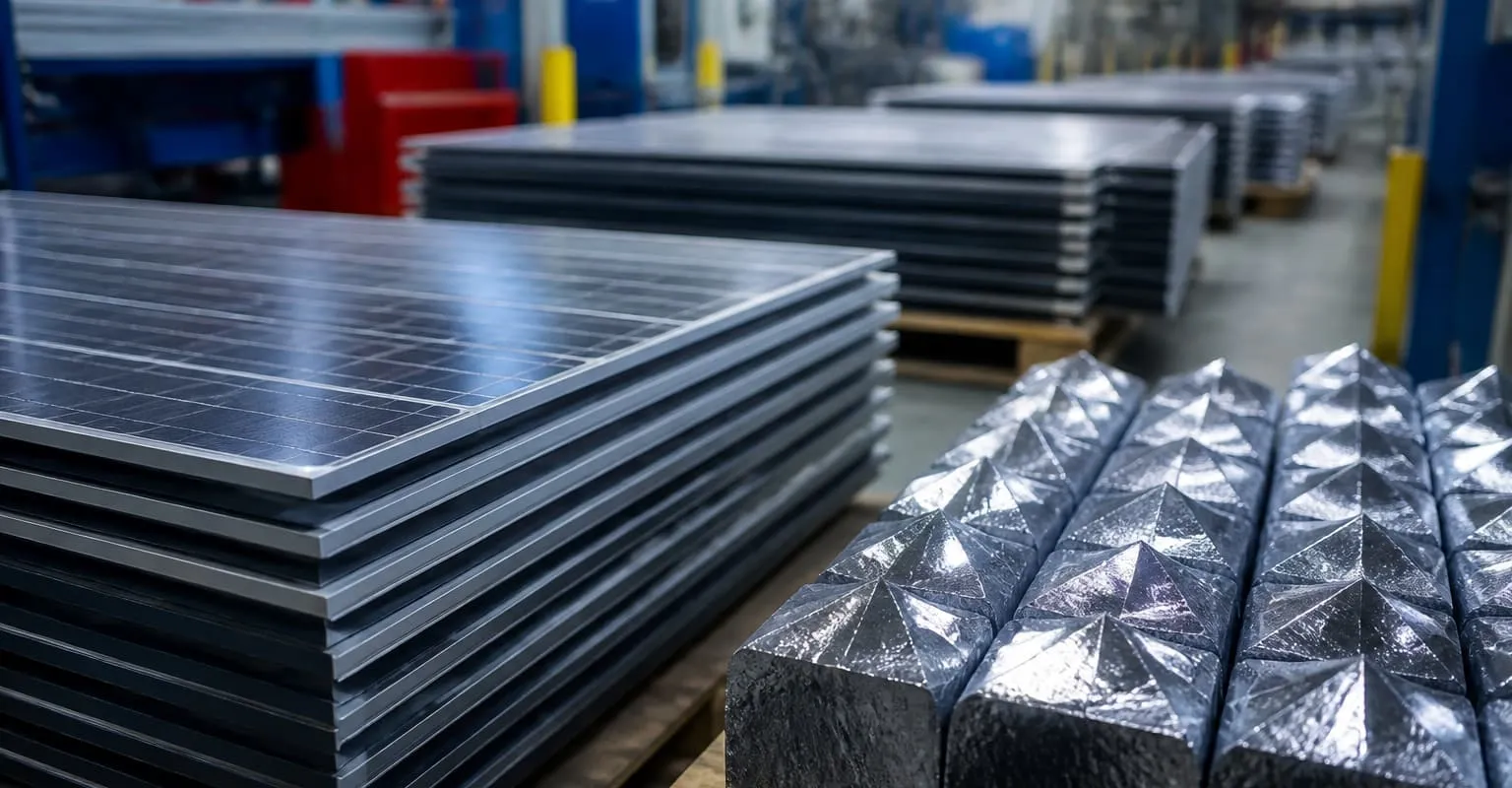
According to The Korea Times, U.S. President Donald Trump signed a proclamation Thursday (U.S. time) imposing a 15 percent tariff on polysilicon derivative products and minimum import prices (MIPs) on polysilicon, ingots, and wafers. The package is meant to protect U.S. polysilicon manufacturing for solar and semiconductor supply chains. Times reports the measures take effect December 4.
For Korean solar-material and panel makers, Times frames a mixed outcome: Chinese price advantage in the U.S. market could shrink, but long-run U.S. onshoring could still crowd Korean exports later.
The breakdown
The proclamation sets floor prices Times lists as $21/kg for polysilicon, $100/kg for polysilicon ingots and wafers, 22 cents/watt for solar cells, and 38 cents/watt for solar modules. Trump’s quoted rationale treats polysilicon as base material for U.S. semiconductor and solar-power security.
Korea International Trade Association analyst Jang Sang-sik tells Times Chinese suppliers have held a large price edge — shipping from China or via Southeast Asia — and that leveling that gap in the U.S. market is “not that unfavorable” for Korea. Named Korean-linked players with non-China chains: Hanwha Qcells (vertically integrated Georgia footprint from ingots through modules) and OCI Holdings (polysilicon in Malaysia). Hanwha Qcells’ global CEO Andy Park welcomed the decision as balancing today’s U.S. manufacturing reality with onshoring ambition; OCI called reduced uncertainty “somewhat positive” while waiting on implementation detail, noting the Section 232 measure was not separated by country.
Korea’s trade ministry, Times says, will consult Washington and convene ministries and industry. Ministry figures cited for 2025: about $2.2 million in U.S. polysilicon exports and $430 million in polysilicon derivatives. The four-month grace before Dec. 4 may spur inventory builds; Jang expects Korean and Chinese suppliers to accelerate shipments, while Commerce is directed to watch stockpiling and circumvention.
Why it matters outside Korea
If you buy U.S. solar modules, finance Korean solar exposure, or source polysilicon-linked parts through Korea/SEA nodes, this is a December pricing and routing story, not a patriotism headline. Overseas PMs should re-check landed-cost models for Q4 shipments and ask whether Korea-origin or Malaysia/Georgia footprints still clear MIP + tariff stacks after Dec. 4. Semiconductor buyers who treat “polysilicon” as solar-only should note Times’ dual-use framing — the proclamation language ties the material to chip security as well.
What travelers and expats should watch
- Do treat Dec. 4 as the commercial flip date for U.S.-bound polysilicon derivatives and related floors — not the Oval Office photo date.
- Don’t read “boost for Korean makers” as a blank check; Times’ own long-run risk line is U.S. factory build-out squeezing import room later.
- Expect a near-term rush to warehouse product in the U.S. before the measures bite — watch freight and inventory chatter from Hanwha/OCI-adjacent supply chains.
- Re-check country-of-origin paperwork if your Korea vendor routes through Southeast Asia; Times’ China-via-SEA price-edge story is exactly what U.S. enforcement will keep probing.
Context
Read this as short-run relative price relief versus China in the U.S. market, not as a permanent Korea win. Korelay’s frame: the famous move is the grace-period inventory race; the sober read is that Washington is building a domestic floor that can eventually wall out allies who helped fill the gap.
Korelay take
Read this as short-run relative price relief versus China in the U.S. market, not as a permanent Korea win. Korelay’s frame: the famous move is the grace-period inventory race; the sober read is that Washington is building a domestic floor that can eventually wall out allies who helped fill the gap.
Editor note: Desk reporting supplies the timeline; Korelay adds the overseas behavior layer (what to change, what not to assume, what to re-check). If you only need the wire facts, open the primary link in Source.
Source
Primary: The Korea Times — US polysilicon tariff offers boost to Korean solar makers (Lee Gyu-lee). Paraphrase only; tariffs, MIPs, dates, and company comments as reported there. This is briefing, not investment advice.