Korea business brief: $19.8b Texas gas power as first US deal
An Encinal, Texas gas-power proposal tests Korea's strategic US investment framework before any final approval.
Source: The Korea Herald
What happened
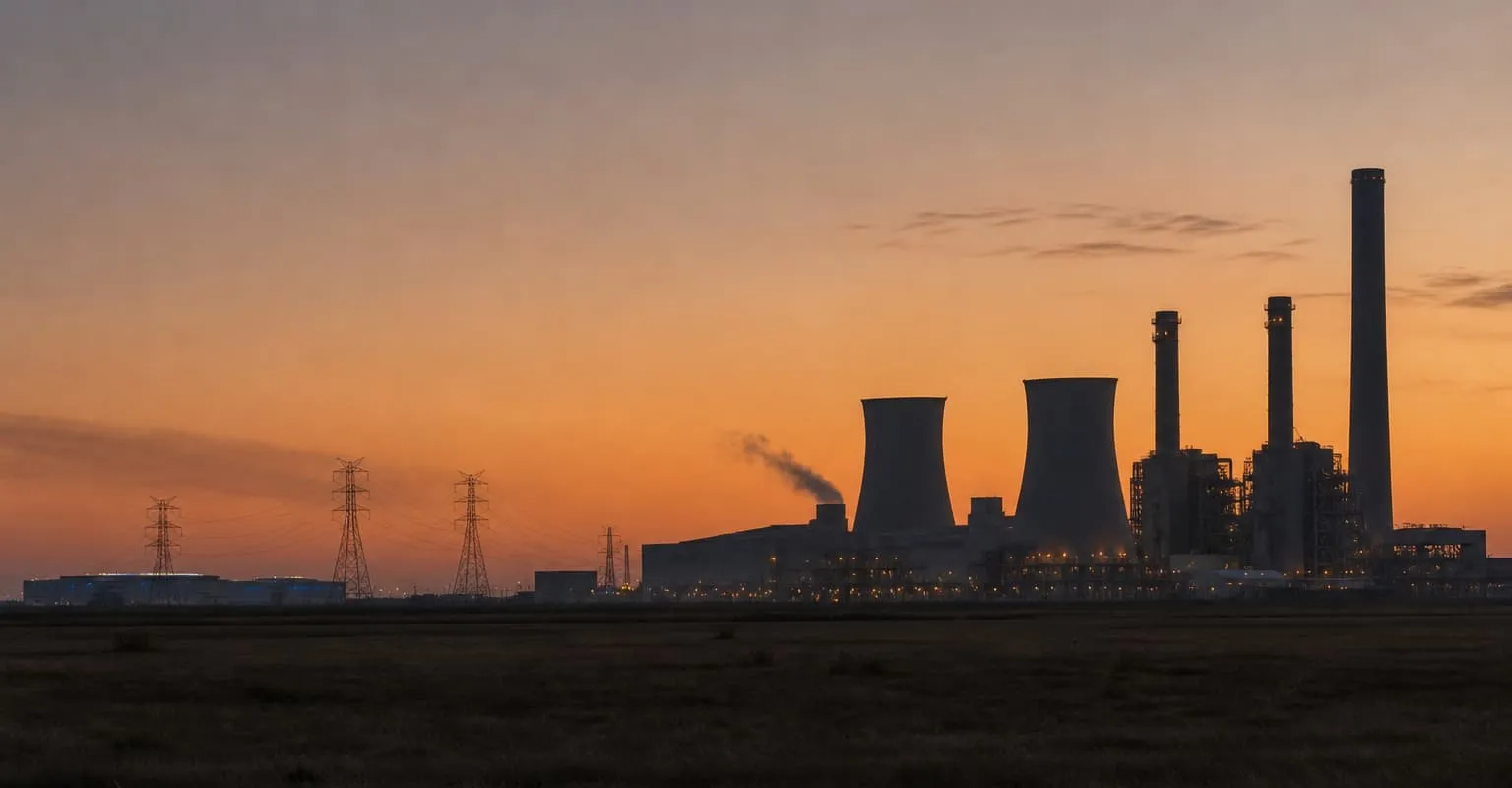
South Korea is nearing a decision on a $19.8 billion gas-fired power project in Encinal, Texas that could become the first investment under its strategic US investment commitment, according to The Korea Herald. The proposed plant would have 6.4 gigawatts of capacity and is expected to be financed through Korea’s US strategic investment fund.
Industry Minister Kim Jung-kwan raised the project with US Commerce Secretary Howard Lutnick and Energy Secretary Chris Wright during a Washington visit running from July 22 to Saturday. An official said Seoul and Washington were in close consultation, while stressing that final details and timing had not been decided.
The breakdown
The project would combine 1.4 GW of gas-turbine capacity with 5 GW of combined-cycle capacity. The site and a long-term gas supply have been secured, and the first phase is expected to begin commercial operations in 2030. Korea would take an equity stake through a special-purpose vehicle, with Korean engineering and plant firms likely to participate.
A nearby data-center complex could require as much as 5 GW of power. The report said power-purchase agreements could provide revenue for more than 10 years. That potential demand is central to the proposal’s commercial case, but the size of Korea’s contribution remains under discussion.
The initiative sits within the Korea-US strategic investment framework agreed in last year’s tariff deal: $350 billion in total, divided into $150 billion for shipbuilding and $200 billion for broader investments. Seoul has enacted legislation and launched the Korea-US Strategic Investment Corp. A bilateral strategic investment committee could review the Texas project as early as August, followed by US review and presidential approval.
Why it matters outside Korea
The Encinal proposal turns a large bilateral commitment into a practical question: can a project pass a commercially viable cash-flow test while satisfying the framework’s strategic purpose? For Korean companies with US customers, contractors, or data-center exposure, the answer will matter more than the headline value alone.
The project also links Korean industrial participation to US power availability. Its planned capacity, long-term gas supply, and possible data-center demand show why the energy and AI-infrastructure conversations are overlapping. But a secured site and supply are not the same thing as a completed investment, signed financing, or operating plant.
What travelers and expats should watch
- Watch the August committee calendar: a review as early as August would be a procedural milestone, not proof that construction or Korean funding is final.
- Do not treat this as locked foreign direct investment: the official said final details and timing remain undecided, and the US review and presidential approval still follow a committee review.
- Track the power-demand connection: Korea-US business travelers working with data centers, engineering, or plant supply chains should watch whether up to 5 GW of nearby demand translates into power-purchase agreements.
- Ask which Korean firms are actually involved: Korean engineering and plant companies are likely participants, but the report does not identify final contractors or a settled contribution size.
Context
Read this as the first concrete test of the $350 billion commitment’s commercially viable cash-flow filter, not as a finished US deal announcement. The project has a defined location, capacity mix, secured gas supply, and a potential data-center customer base. Yet its funding share, timing, committee outcome, US review, and presidential approval remain steps ahead. For Korea-touching businesses, the useful update is to follow those gates rather than assuming the investment has already landed.
Korelay take
Read this as the first concrete test of the $350 billion commitment’s commercially viable cash-flow filter, not as a finished US deal announcement. The project has a defined location, capacity mix, secured gas supply, and a potential data-center customer base. Yet its funding share, timing, committee outcome, US review, and presidential approval remain steps ahead. For Korea-touching businesses, the useful update is to follow those gates rather than assuming the investment has already landed.
Editor note: Desk reporting supplies the timeline; Korelay adds the overseas behavior layer (what to change, what not to assume, what to re-check). If you only need the wire facts, open the primary link in Source.
Source
The Korea Herald: Korea eyes $19.8b Texas gas power project as first US investment — paraphrased for briefing; read the original for full detail.