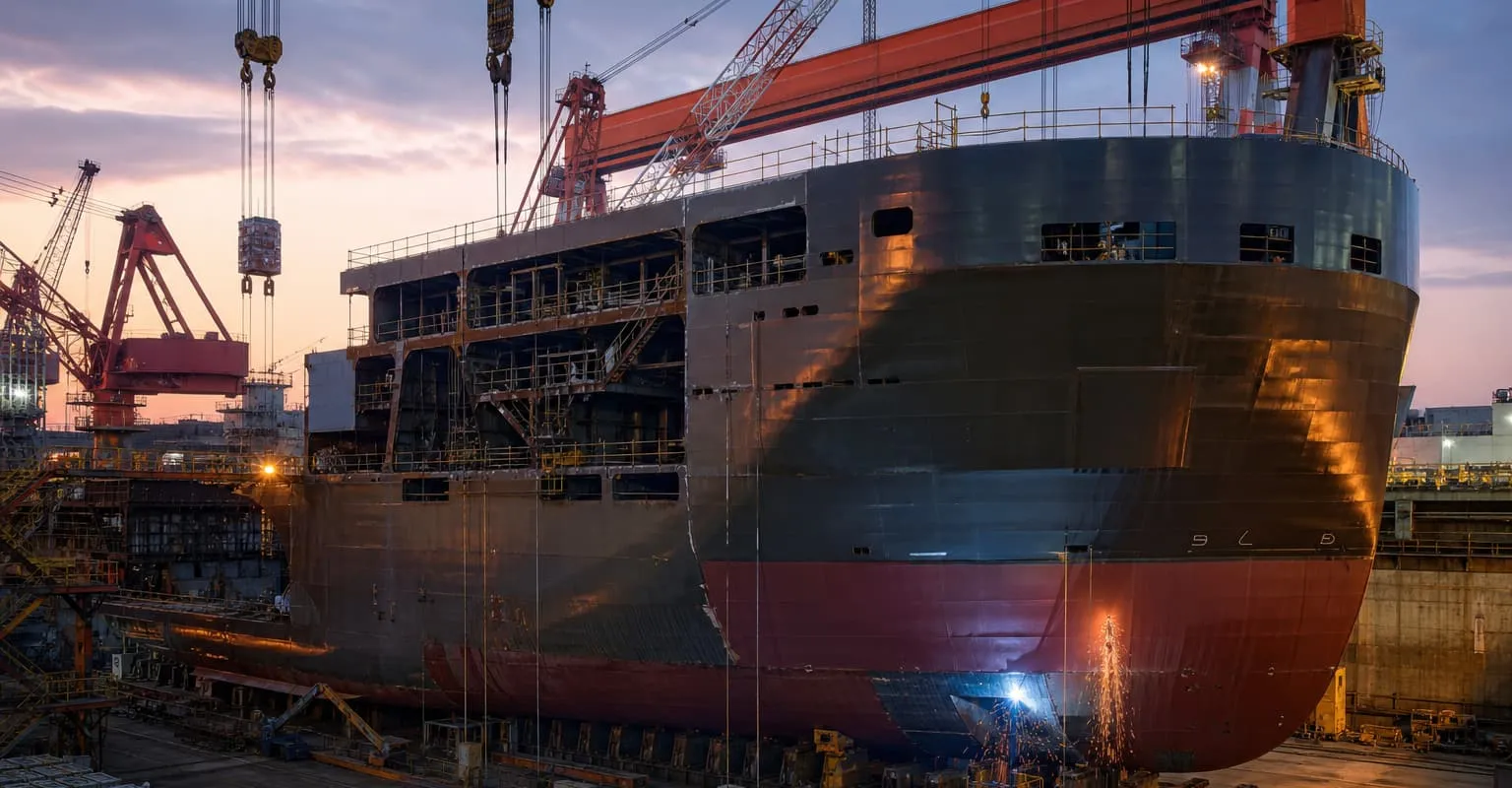
Korea business brief: MASGA hub opens in Washington with a results test
KUSPC launches with a $13M budget through 2028 — Lutnick says judge capital, yards, workers, and ships, not cocktail parties.
Source: The Hankyoreh
What happened
Washington just opened a scoreboard office for Korean shipbuilding money — and the U.S. commerce secretary already told it what will not count. According to The Hankyoreh, the Korea–U.S. Shipbuilding Partnership Center (KUSPC) opened Thursday as the on-the-ground hub for MASGA (“Make American Shipbuilding Great Again”). Korea plans to put US$150 billion of a broader US$350 billion U.S. investment package into U.S. shipbuilding; KUSPC is meant to identify projects, modernize yards, exchange technology, and train workers.
Korea’s Ministry of Trade, Industry and Resources and the U.S. Commerce Department hosted the opening at the Mayflower Hotel before roughly 130 government, legislative, and industry figures, including Industry Minister Kim Jung-kwan and Commerce Secretary Howard Lutnick.
The breakdown
Hankyoreh’s useful detail is the results test and the starter budget:
- Lutnick said the U.S. will not score the center on meetings, MOUs, or cocktail parties — only capital deployed, facilities modernized, workers trained, supply chains built, and “how many domestically produced ships we make together.”
- He pledged to “clear the regulatory roadblocks” for building in America.
- Director Lee Jong-geon said KUSPC has a 5,000-square-foot Washington office with four full-time staff.
- Budget: 19.93 billion won (about US$13 million) through 2028, with Korean government support.
- Near-term priorities: train 100 U.S. shipyard workers, consult for American yards, and support joint R&D.
- Fifteen MOUs were signed; Korea’s top three shipbuilders — HD Hyundai Heavy Industries, Hanwha Ocean, and Samsung Heavy Industries — agreed to form “Team Korea” to modernize U.S. yards.
- New U.S. ambassador to Korea Michelle Steel called shipbuilding cooperation a visible alliance expansion in her first public remarks since confirmation.
MASGA itself was Seoul’s shipbuilding offer in last year’s tariff talks — slogan hats and all.
Why it matters outside Korea
If you work U.S. yards, Pacific fleet supply chains, LNG carrier planning, or Korea industrial policy from abroad, this is the governance layer that decides whether MASGA becomes ships or remains branding. A $13 million center through 2028 is tiny next to the $150 billion headline — which is exactly why Lutnick’s metrics speech matters. The overseas watch is whether training slots, yard consulting, and ship counts show up, not whether more MOUs get inked.
What travelers and expats should watch
- Separate hub news from hardware news. A Washington partnership office is not the same as a Port of Tacoma crane delivery or a keel laying.
- If you are in U.S. maritime labor or yard services, the named near-term offer is training for 100 workers plus consulting — watch which yards get first slots.
- Do not treat “$150 billion” as already spent. Hankyoreh reports the package intention and a small operating budget; capital deployment is the scoreboard Lutnick named.
- Alliance politics: Steel’s first public speech tying shipbuilding to the broader alliance means MASGA will stay a Seoul–Washington talking point — useful context when tariff or investment bills stall.
Context
Korelay frame: read this as a results-gated alliance office, not proof American shipbuilding is already “great again.” The Hankyoreh piece is clearest when Lutnick rejects meeting-count vanity metrics. Pair that with any concrete hardware deals you track — and demand the same scoreboard: capital, yards, workers, ships.
Korelay take
Korelay frame: read this as a results-gated alliance office, not proof American shipbuilding is already “great again.” The Hankyoreh piece is clearest when Lutnick rejects meeting-count vanity metrics. Pair that with any concrete hardware deals you track — and demand the same scoreboard: capital, yards, workers, ships.
Editor note: Desk reporting supplies the timeline; Korelay adds the overseas behavior layer (what to change, what not to assume, what to re-check). If you only need the wire facts, open the primary link in Source.
Source
The Hankyoreh: New MASGA hub marks next phase of Korea-US shipbuilding partnership — paraphrased for briefing; read the original for full detail.