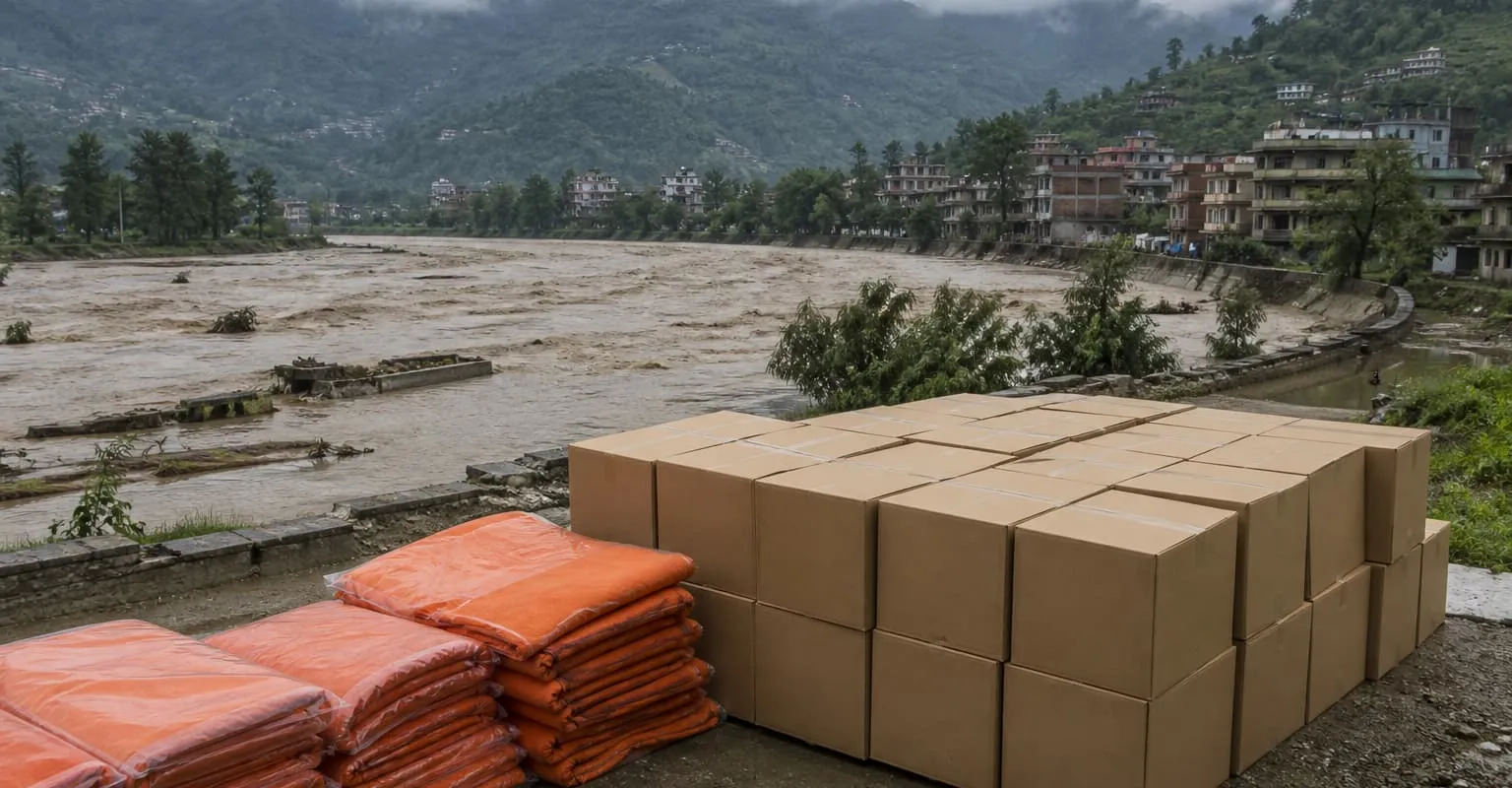
Korea business brief: Export-Import Bank sends 200 million won to Nepal flood relief
Segye Ilbo reports KEXIM donated 200 million won to the Korean Red Cross on Aug. 30 for Bagmati Province flood victims after Aug. 26 deluges — earmarked for shelters, supplies, and medical-food aid.
Source: Segye Ilbo · 경제
What happened
Korea Export-Import Bank (KEXIM), Seoul’s state-backed export credit agency, said on Aug. 30 that it donated 200 million won to the Korean Red Cross to help people displaced by major floods in Nepal’s Bagmati Province. According to Segye Ilbo, the deluges struck on Aug. 26, leaving many residents with heavy damage. KEXIM said the money is meant to support relief for affected civilians.
The breakdown
The donation is routed through Korea’s Red Cross rather than sent directly to Nepalese agencies — a familiar channel for Korean institutional giving when a disaster hits abroad.
Segye Ilbo reports the 200 million won will fund temporary shelter operations, relief supplies, and medical and food support. The article does not break those buckets into separate line items.
KEXIM President Hwang Ki-yeon offered condolences to Nepalese people hurt by the floods, said he hopes the support will help victims return to daily life quickly, and expressed hope that people still missing would return safely. Segye Ilbo quotes that message but does not attach a disbursement timeline beyond the stated purposes.
For Korea watchers, the move is small in won terms but clear in signaling: a policy bank that normally underwrites overseas trade finance is using its CSR lane to back Red Cross logistics for a South Asian flood corridor where Korean contractors and travelers already had a live crisis week.
Why it matters outside Korea
Nepal’s Bagmati Province sits on Kathmandu Valley routes that Korean energy, construction, and trekking-linked traffic uses. When a policy bank publishes a Red Cross grant days after valley floods, foreign firms with Himalayan exposure read it as part of Seoul’s disaster-response posture — not a substitute for embassy evacuation, but a signal that official Korea is still engaged after helicopter lifts fade from headlines.
For development-finance desks, KEXIM’s 200 million won tranche marks how Korean state lenders separate trade finance from disaster philanthropy. Partners should not expect this grant to change export insurance pricing; they should note that ESG reporting channels now include Red Cross flood lines tied to named provinces.
What travelers and expats should watch
- Do not confuse bank aid with consular rescue status. KEXIM’s grant does not update missing-person files or evacuation counts; travelers in Nepal should follow Ministry of Foreign Affairs and embassy channels, not export-credit press releases.
- If you volunteer or donate from Korea, ask which corridor the Red Cross allocation targets. Segye Ilbo specifies Bagmati Province and lists shelter, supplies, and medical-food uses — match your giving to that geography instead of assuming a national pool.
- Employers with Nepal field teams should align duty-of-care messaging. A state bank’s condolence statement can reassure headquarters, but expat site leads still need local shelter, comms, and extraction plans independent of CSR announcements.
- Watch for follow-on corporate pledges. KEXIM’s grant is modest; larger Korean EPC or energy names with Bagmati exposure may announce separate packages — verify each release rather than treating one 200 million won line as the whole private-sector response.
Context
Read this as a defined Red Cross grant from Korea’s export credit bank after Bagmati floods, not as a reconstruction fund, debt relief, or direct budget transfer to Nepal’s government. Segye Ilbo’s report gives one amount (200 million won), one date of disaster (Aug. 26), one province (Bagmati), and four spending buckets — shelter operations, relief goods, medical help, and food — channeled through 대한적십자사 with a presidential message focused on recovery and the missing. The insight for business readers is institutional: KEXIM is signaling solidarity through Korea’s humanitarian middle layer while leaving rescue diplomacy and project insurance to their own tracks.
Source
Segye Ilbo · 경제: 네팔 대홍수에 온정 손길… 수출입은행, 구호성금 2억 — Korean original; paraphrased for briefing. Soft briefing only — not personalized financial, travel, or disaster-relief advice.