Korea business brief: July exports near a record on chip heat
July outbound shipments hit $98.89 billion — second-highest ever — as semiconductors alone cleared $41 billion. What that mix means for buyers and Korea-exposed logistics.
Source: Yonhap News Agency
What happened
According to Ministry of Trade, Industry and Resources figures carried by Yonhap on Aug. 1, South Korea’s July exports reached US$98.89 billion — up nearly 63% from a year earlier and the second-highest monthly total ever, just under June’s record $102.2 billion. Imports rose 26.5% to $68.56 billion, leaving a trade surplus of $30.32 billion.
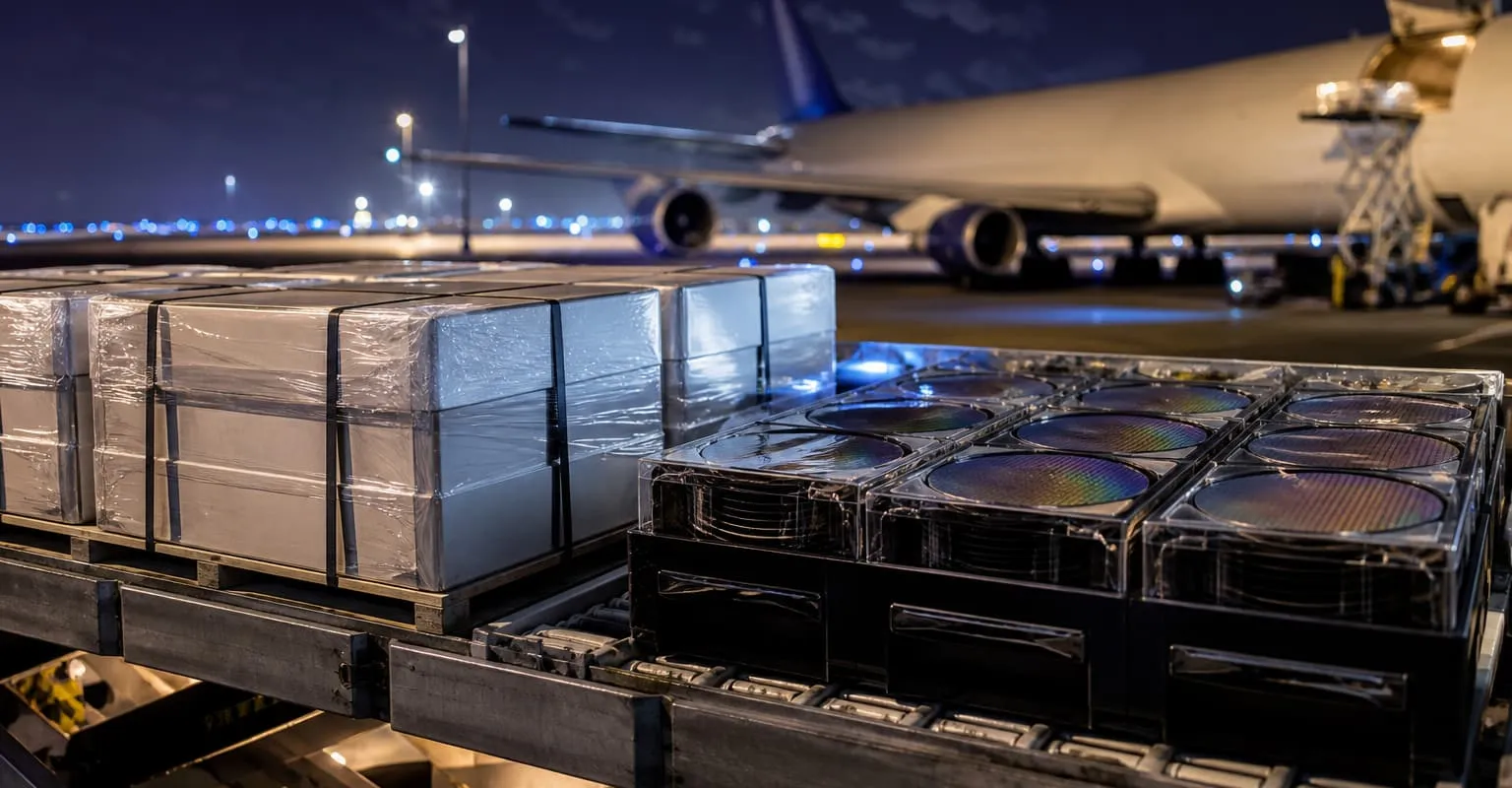
Semiconductors did the heavy lifting: chip exports jumped 179% to $41 billion, topping $40 billion for a second straight month as AI data-center demand kept memory prices elevated.
The breakdown
Autos rose 7% to $6.2 billion on hybrid and eco-friendly demand. Petroleum products climbed 34.1% to $5.68 billion (value up even as volume was managed for domestic supply). Petrochemicals gained 10.3% to $4.18 billion. Mobile devices rose 51% to $1.81 billion. Among the top 20 export categories, home appliances were the only decliner — down 4.1% to $600 million — tied to weak U.S. housing demand.
By destination: China nearly doubled to $21.68 billion; the U.S. surged 68.7% to $17.4 billion; Southeast Asia rose 73.7% to $18.8 billion; the EU gained 55.7% to $9.38 billion. Excluding semiconductors, total exports still rose 26%.
Industry Minister Kim Jung-kwan credited diversification — 19 of 20 major categories gained — while warning about protectionism and Middle East uncertainty.
Ministry language in the Yonhap report ties the chip surge to “agentic AI” server demand and rising DRAM and NAND prices — not to a one-off shipping quirk. That matters for how you read the $41 billion chip line: it is price plus volume in a tight memory cycle.
Autos and refined energy products kept the non-chip stack from looking hollow, but the appliance miss is a useful counter-signal. When 19 of 20 categories rise and the one fall tracks U.S. housing, the export “boom” is still selective.
Why it matters outside Korea
If you buy Korean memory, book Korea freight, or hold Korea-exposed chip names, July is not a vague “exports strong” headline. It is a chip-price and AI-server month with a visible U.S./China/ASEAN split — and a soft patch in appliances that tracks U.S. housing, not Seoul vibe.
For overseas procurement teams, the destination split is the operational map: China and ASEAN took large chip-heavy shares, while the U.S. line explicitly names AI data-center investment. A Korea-exposed logistics plan that still assumes “everything goes through the same dull lane” will mis-size air freight and lead times.
What travelers and expats should watch
- Do not read the surplus as a green light for every Korea industrial stock; the stack is memory-heavy.
- Expect Incheon air freight and chip logistics to stay busy while AI server demand holds.
- Re-check appliance and housing-linked orders if your Korea supply chain still leans on U.S. retail housing cycles.
- Watch tariff and non-tariff talk from Seoul — the ministry already flagged them as live headwinds.
Context
Wire coverage will celebrate the near-record total. Korelay’s frame: read July as AI memory carrying the scoreboard, not as proof every Korean export lane is hot. The appliance drop is the tell that U.S. end-markets still bite.
Also keep the minister’s caution in view: protectionism and Middle East uncertainty are already on Seoul’s checklist. Near-record July does not cancel tariff risk; it raises the cost of being wrong about which product lines still clear cleanly.
Korelay take
Wire coverage will celebrate the near-record total. Korelay’s frame: read July as AI memory carrying the scoreboard, not as proof every Korean export lane is hot. The appliance drop is the tell that U.S. end-markets still bite.
Also keep the minister’s caution in view: protectionism and Middle East uncertainty are already on Seoul’s checklist. Near-record July does not cancel tariff risk; it raises the cost of being wrong about which product lines still clear cleanly.
Editor note: Desk reporting supplies the timeline; Korelay adds the overseas behavior layer (what to change, what not to assume, what to re-check). If you only need the wire facts, open the primary link in Source.
Source
Yonhap: S. Korea’s monthly exports hit 2nd highest ever on strong chip shipments — paraphrased for briefing; read the original for full tables and quotes.