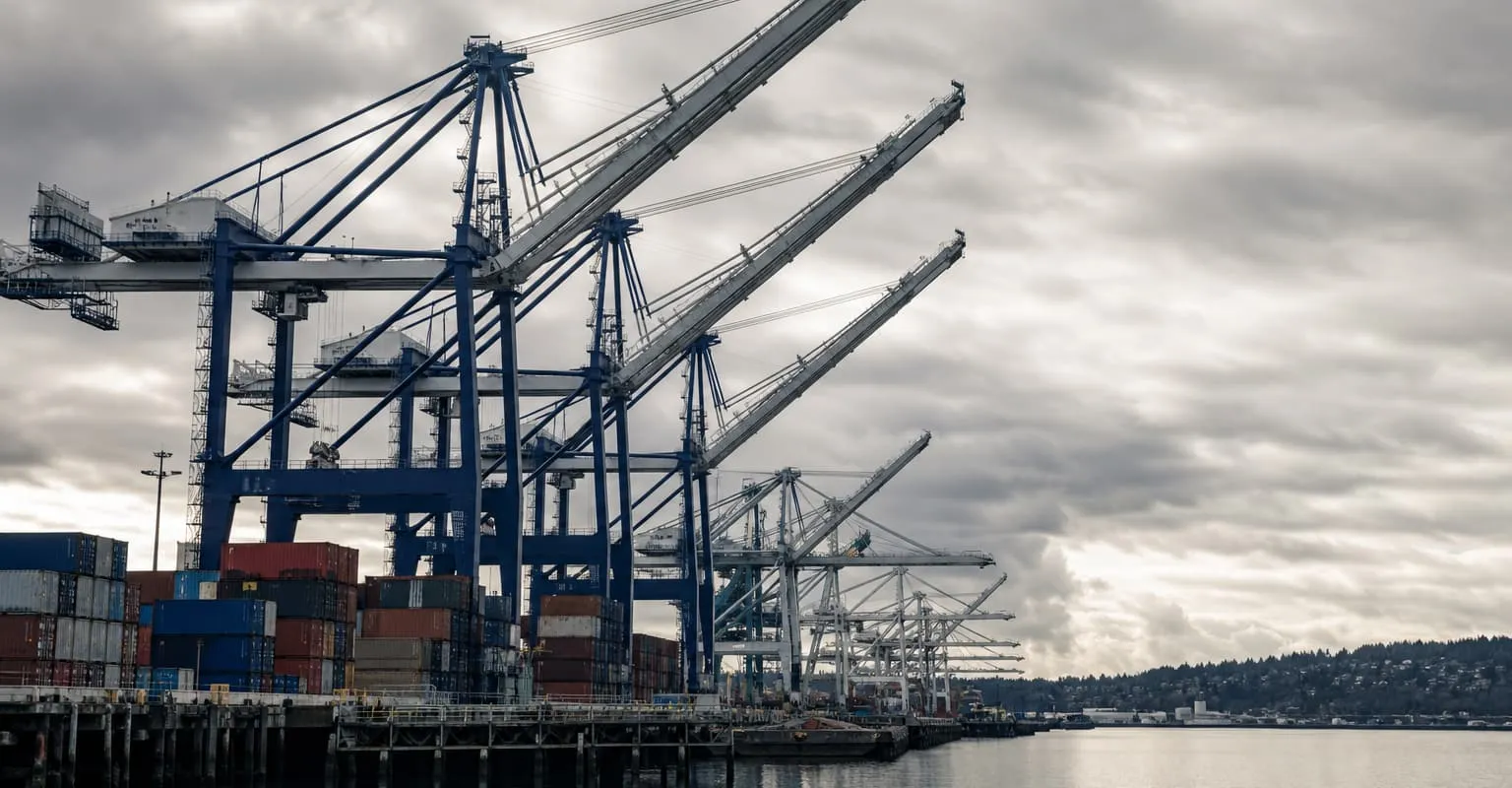
Korea business brief: HD Hyundai Samho wins Tacoma crane order under MASGA
Four Port of Tacoma cranes for WUT — a concrete MASGA hardware deal, not another MOU headline.
Source: The Korea Herald
What happened
According to The Korea Herald, HD Hyundai Samho said Sunday it won an order to supply four cranes to Washington United Terminals (WUT) at the Port of Tacoma, tied to the Korea–U.S. shipbuilding cooperation track known as MASGA. WUT is the U.S. subsidiary of HMM and already runs eight quay cranes at the terminal, including four delivered by HD Hyundai Samho in 1999.
The latest package replaces aging equipment and supports larger container ships. Delivery is scheduled for 2028.
The breakdown
Herald’s deal shape is more specific than a typical partnership press line:
- Scope: replace two aging quay cranes and add two yard cranes
- Delivery model: turnkey — design, manufacturing, transport, installation, and commissioning
- Steel: Posco supply, keeping the Korean shipbuilding–port–steel stack in one project
- Track record cited: 20 cranes supplied to major U.S. ports since 1985
- Photo context: the signing lineup at Washington’s Mayflower Hotel included Korea’s trade minister, HD Hyundai Samho, HMM Americas, WUT’s CEO, and U.S. Commerce Secretary Howard Lutnick
Samho frames the order as recognition of engineering quality and as a beachhead for more MASGA-linked port work as the U.S. pushes infrastructure, supply chains, and security. The 1999 precedent matters: this is a replacement-and-expansion cycle at a terminal that already runs Samho gear, not a cold first pitch to an unfamiliar U.S. buyer.
Why it matters outside Korea
If you follow Korea–U.S. industrial diplomacy from Seattle, Tacoma, or any Pacific cargo desk, this is the useful filter: MASGA is no longer only Washington ribbon-cuttings. A named terminal, a named crane count, a 2028 delivery, and a turnkey install mean port modernization money is already translating into Korean-built hardware on U.S. soil.
For logistics planners and Korea-exposed manufacturers, Tacoma capacity upgrades also matter as Pacific gateways absorb larger ships — even when the headline is “shipbuilding partnership,” the near-term object is cranes, not frigates. Pair this brief with any KUSPC / Washington hub coverage you see the same week: the hub is the scoreboard office; Tacoma is one early hardware receipt.
What travelers and expats should watch
- Do not confuse this with a Navy shipyard groundbreaking. Herald’s facts are port cranes for WUT/Tacoma, delivery 2028.
- If your supply chain touches Puget Sound, expect modernization work around HMM’s terminal — plan for construction windows, not instant capacity miracles.
- Treat MASGA claims as staged. A four-crane order is real hardware; it does not by itself prove the full US$150 billion shipbuilding package is executing on schedule.
- Korea-side industrial watchers: Posco-linked steel plus Samho turnkey is a template — more port-equipment packages may follow if U.S. terminals keep replacing 1990s gear.
Context
Korelay frame: read this as MASGA becoming billable port kit, not another slogan-cap ceremony. The wire can bury the difference between a Washington partnership center and a Tacoma crane order; the behavior update is to track named terminals, delivery years, and turnkey scope when someone claims the alliance is “shipping again.”
Korelay take
Korelay frame: read this as MASGA becoming billable port kit, not another slogan-cap ceremony. The wire can bury the difference between a Washington partnership center and a Tacoma crane order; the behavior update is to track named terminals, delivery years, and turnkey scope when someone claims the alliance is “shipping again.”
Editor note: Desk reporting supplies the timeline; Korelay adds the overseas behavior layer (what to change, what not to assume, what to re-check). If you only need the wire facts, open the primary link in Source.
Source
The Korea Herald: HD Hyundai Samho wins US crane order under MASGA project — paraphrased for briefing; read the original for full detail.