Korea business brief: Dollar deposits and gold sales surge as stock turnover hits a 2026 low
Korea's top five banks logged record dollar-deposit balances and a near-tripling of gold-bar sales in August while KOSPI turnover fell to 0.56% — a flight to safety as volatility freezes equity trading.
Source: Segye Ilbo · 경제
What happened
According to Segye Ilbo, widening stock-market volatility is freezing Korean investor sentiment and pushing cash toward safe assets. As the won–dollar rate slid into the 1,300-won range, dollar-deposit balances at the five largest commercial banks hit a new combined high, gold-bar sales nearly tripled from July’s pace, and KOSPI turnover sank to the year’s lowest level.
As of Wednesday, August 20, KB Kookmin, Shinhan, Hana, Woori, and NH NongHyup held $74.92 billion in total dollar deposits, up $5.48 billion (8 percent) from $69.44 billion at end-July — the largest since the five-bank series began in May 2021.
The breakdown
Dollar deposits: Personal balances reached $13.22 billion, up $510 million from end-July — the highest in four years and six months. Corporate deposits stood at $61.7 billion, the most in three years and eight months. Segye Ilbo links the inflow to won-to-dollar conversion after the rate fell from 1,555.8 won on August 2 to 1,386.5 won on August 21. Strong export earnings also added corporate holdings; one bank official said firms are parking export dollars for future overseas investment timing.
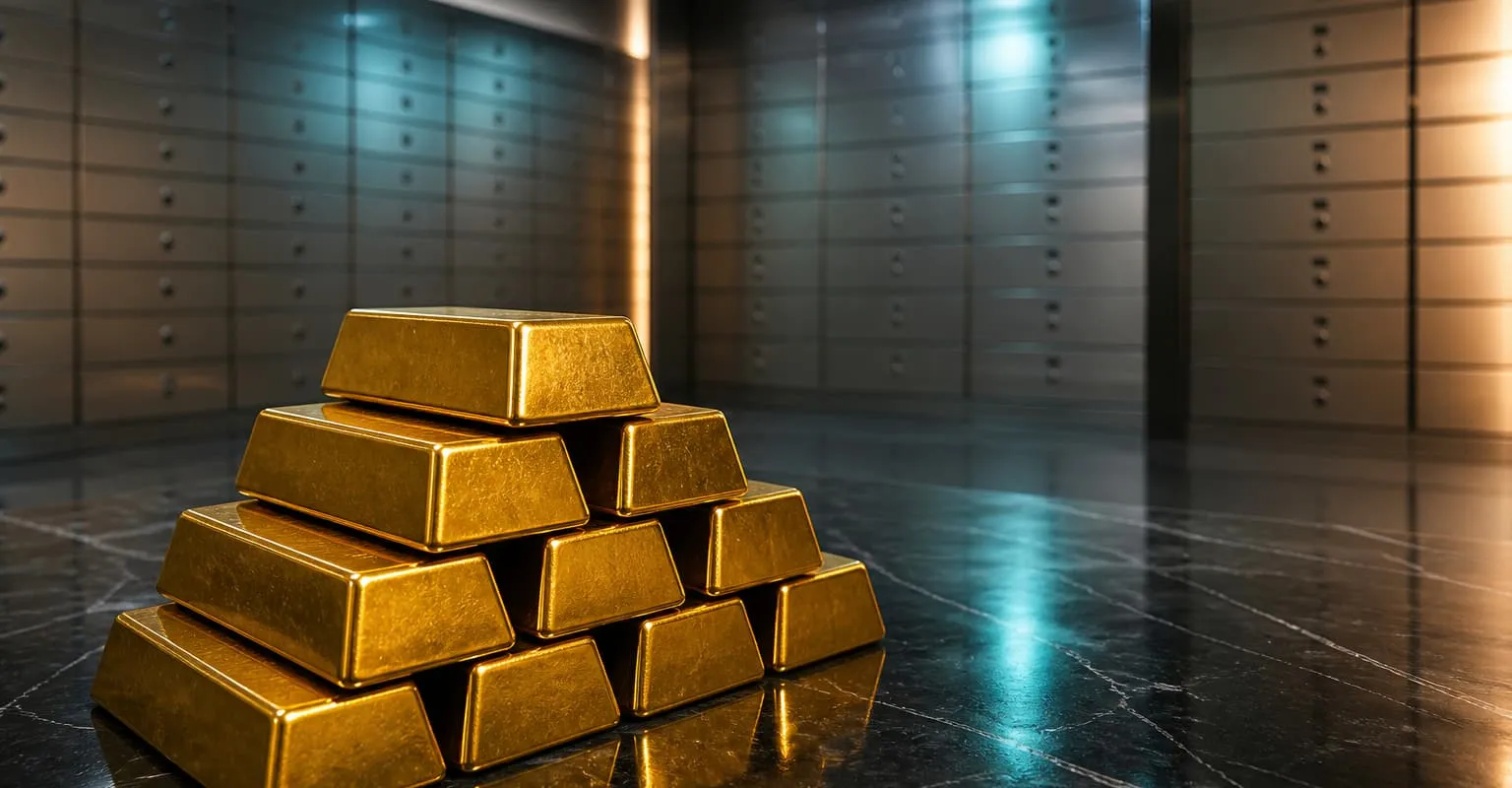
Gold: From August 1–20, the five banks sold 82.96 billion won of gold bars — nearly three times July’s 30.01 billion won (the year’s low) and the largest August-to-date tally since January. Gold-banking balances at KB, Shinhan, and Woori totaled 1.8107 trillion won, up 94.8 billion won from end-July — the first increase in seven months. Spot gold rebounded from $3,972.94 on July 16 to $4,603.56 on August 21, per Investing.com; Segye Ilbo ties the rally partly to Fed rate-hold expectations.
Stocks: KOSPI daily average turnover from August 1–21 was 0.56 percent — about 5.6 shares traded per 1,000 listed shares each day, the lowest this year and weakest since August 2025’s 0.50 percent. Turnover peaked at 1.74 percent in March, then fell through July (0.72 percent); August’s pace is roughly one-third of March’s. Segye Ilbo cites July’s extreme swings, fading early-year optimism, and tighter single-stock leveraged ETF rules effective July 31 as drags on activity.
Why it matters outside Korea
Korea is a major semiconductor exporter and a bellwether for Asian retail risk appetite. When local investors park dollars and gold instead of rotating into KOSPI, it can signal muted domestic equity demand even if chip earnings stay strong — a pattern foreign index managers and won traders watch through ADR volumes and cross-border flows. Dollar hoarding and gold buying also reflect how Fed expectations and won volatility interact.
What travelers and expats should watch
- If you hold won cash or send remittances: The rate moved from the 1,550s in early August to the 1,380s by August 21. Large USD→KRW conversions timed around payroll or rent may differ materially within weeks; check live bank spreads rather than last month’s levels.
- Gold and dollar products at Korean banks: Gold-bar sales and gold-banking balances are rising after July’s slump. Expats comparing physical gold, gold accounts, or FX deposits should read fee sheets and redemption rules — retail demand spikes can affect wait times even when global spot gold is already elevated.
- Do not treat low turnover as “the market is safe”: Thin KOSPI trading often means fewer buyers on bad days, which can amplify gaps if volatility returns. Market-structure context only, not investment advice.
Context
Read this as a domestic flight to dollars and gold while equity desks go quiet, not as proof Korea’s export engine is failing. Segye Ilbo’s stack is $74.92B five-bank dollar deposits (+8% vs July) / 82.96B won gold-bar sales in 20 days (~3× July) / 0.56% KOSPI turnover (2026 low). Corporate and household dollar piles are both rebuilding after the won’s summer slide, gold demand is catching a global price rebound, and the same volatility that makes bullion attractive is what has investors stopping stock churn — including after new leveraged-ETF limits.
Source
Segye Ilbo: 달러예금·골드 구매 증가… 주식 매매는 연중 최저 — Korean original; paraphrased for briefing; read the original for full detail.